What a Partial Federal Shutdown in 2026 Could Mean for Americans
Note: This piece explains the mechanics and potential impacts of a hypothetical partial government shutdown that could occur if Congress fails to enact 2026 appropriations. It does not constitute legal or financial advice.
Understanding the budget process and what triggers a shutdown
Every year, the U.S. Congress must pass twelve appropriation bills or a continuing resolution (CR) that funds the government agencies and programs for the new fiscal year, which begins on October 1. If Congress and the President cannot reach agreement on funding, the federal government may begin to shut down nonessential operations while essential functions continue. A full shutdown occurs when funding gaps are large and lasting, but a partial shutdown is more common when some essential authorities are preserved and other activities are delayed or paused.
The federal budget process is complex by design. Agencies forecast needs, the White House proposes spending levels, Congress drafts and votes on appropriations, and the President signs or vetoes the bills. When money runs out before new appropriations are enacted, agencies shift into a “stopgap” mode. Historically, lawmakers often resolve the impasse with a temporary funding patch, known as a continuing resolution, that keeps most of the government running at current or adjusted levels while a longer-term agreement is negotiated. If a CR is not enacted and funds lapse, a shutdown follows. If the impasse is resolved, operations resume with minimal disruption beyond any required back pay or retroactive funding.
Even in a partial shutdown, the critical question is this: which functions are funded and which are not? The line between essential and nonessential operations determines what continues and what halts. The Office of Management and Budget (OMB) and agency leadership identify programs that are vital to national security, public safety, and health, and they determine how long those services can continue without interruption. Everything outside that list faces restrictions or furloughs until funding resumes.
What does a partial shutdown look like in practice?
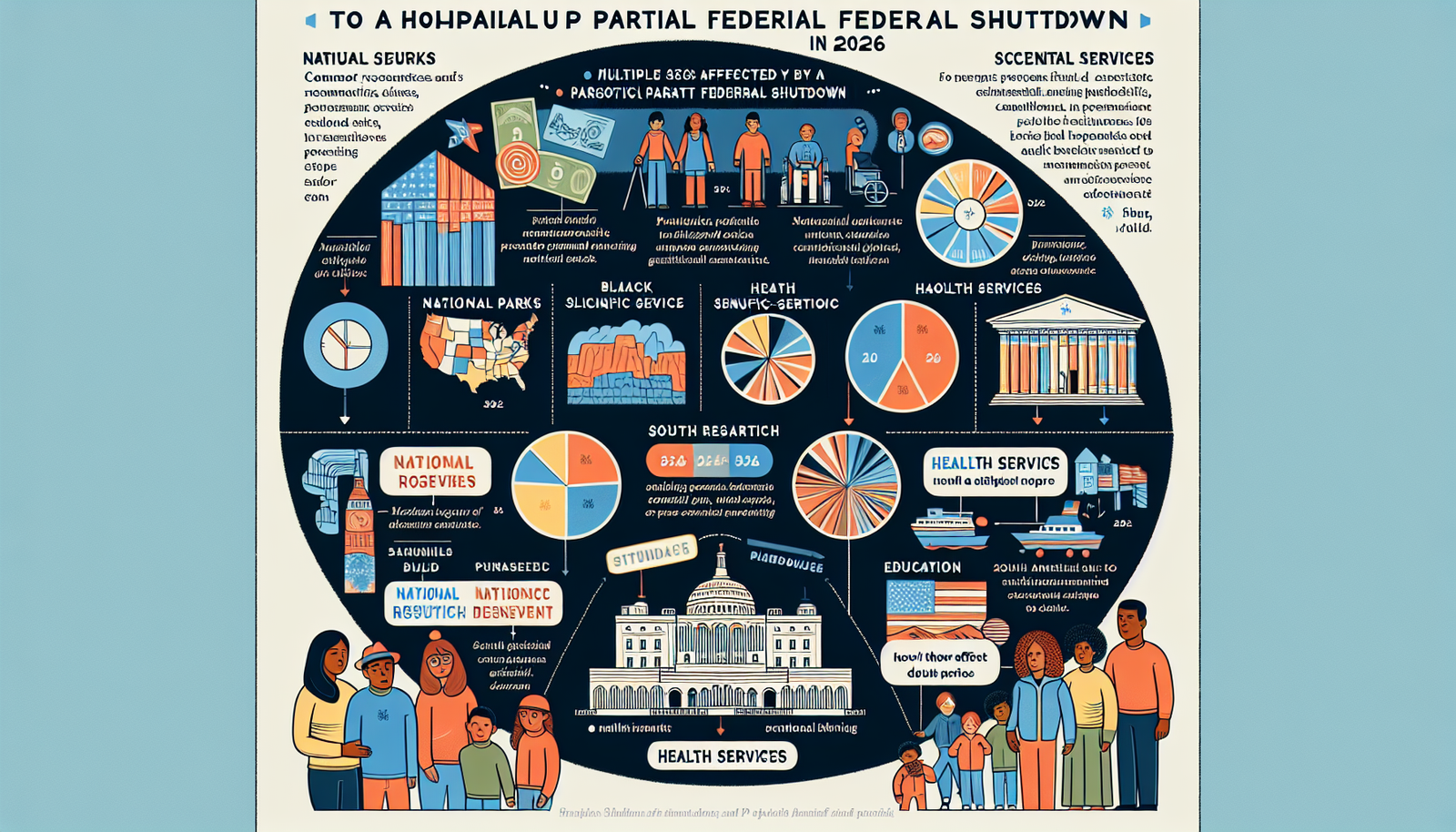
A partial shutdown is not the same as a total shutdown. It typically means many nonessential federal employees are furloughed, some services are temporarily paused or reduced, and non-urgent grant and procurement activities are delayed. In practical terms, you might observe the following during the early days of a partial shutdown:
- Furloughs for nonessential federal workers, with back pay often a later issue subject to legislative action.
- Delays in routine services such as passport processing, visas, and some regulatory inspections.
- Suspension or delay of discretionary grants and new loan approvals, affecting local communities and researchers.
- Temporary closure of national parks, museums, and other facilities that rely on nonessential staff for daily operations.
- Continued operations for essential services, including air traffic control, national security, the military, and public safety agencies.
The exact mix of closures and continuities depends on agency-specific guidance and the scope of the funding gap. Some programs deemed critical for human safety and welfare—such as food safety inspections or emergency medical services—often continue at scale, while others operate on limited staff with delays in routine processing. These patterns can vary from one shutdown to the next depending on the political and legal context of the funding lapse.
Who is affected—and how their daily lives change
The human impact of a partial shutdown extends beyond federal employees. Here are the main categories affected and practical implications you might notice:
Federal employees and contractors
Nonessential federal employees typically go on furlough, which means they do not come to work and are not paid until funding is restored and back wages are approved. Essential personnel continue to work, often without pay during the lapse. Contractor workers who support funded programs may experience delays in payments and project timelines. For many workers, the shutdown creates uncertainty about paychecks, benefits, and future employment stability.
Individuals relying on federal programs
Programs with automatic or entitlements—such as some social services, research grants, and health-related funding—can face slowdowns. In some cases, regulatory actions or approvals required for benefits may be postponed. The pace of service delivery slows, which can ripple through state and local governments, universities, and nonprofit organizations that rely on federal funding.
Businesses and investors
Businesses that depend on government contracts or timely regulatory approvals may experience delays, affecting cash flow and planning. Some federal data releases, regulatory reviews, or permit processes might be postponed, which can influence decisions by investors and lenders. Market volatility can accompany the onset of a funding lapse as certainty about policy direction declines.
Researchers and educators
Research institutions and universities often rely on federal grants and cooperative agreements. A shutdown can pause new awards, force delays in ongoing projects, and slow the dissemination of federally funded results. The longer the lapse lasts, the greater the potential disruption to research milestones and student programs.
U.S. residents seeking services from federal agencies
Citizens may notice delays in routine services, such as processing of federal licenses, benefits paperwork, or access to certain public facilities. Even when an agency remains functional at a minimal level, appointment wait times and call center volumes often increase as staff juggle reduced resources and higher demand.
Economic and policy implications of a partial shutdown
A shutdown affects not only day-to-day services but also the broader economy and policy environment. Here are several dimensions to consider:
- Short-term economic drag: Even a temporary funding gap can slow growth because consumer confidence softens, federal purchases pause, and government contracts slip on schedule. Financial markets may react to heightened political risk and uncertainty about the budget path.
- Credit and debt management: The Treasury Department continues to manage government debt obligations during a shutdown, but disruptions to cash flow can complicate the timing of payments to government suppliers or Social Security beneficiaries. The government’s debt can still be serviced, but certain routines—like certain tax refunds—could see delays if processing systems are strained.
- Public perception and trust: Prolonged impasses can affect trust in governance and the perceived reliability of the federal government to deliver essential services in times of need.
- Longer-term policy risk: If a partial shutdown ends with little budgetary clarity (i.e., recurring last-minute funding patches), it can hamper long-range planning by agencies, universities, and private partners that depend on predictable federal support.
Federal agencies often issue guidance to explain which services are functional and what the expected timelines are for resume of normal operations. For observers and journalists, the shutdown provides a window into how the budget process affects real people, communities, and businesses beyond the walls of Washington, D.C.
Lessons from past shutdowns and what they teach about 2026
While each shutdown has its unique political context, several recurring lessons emerge from the record of previous occasions when funding gaps led to partial or full pauses in government operations:
- Budget predictability matters: Agencies plan around known dates for funding. Uncertainty disrupts hiring, procurement, and grant cycles, sometimes for months after funding resumes.
- Public services can endure, but not without friction: Essential services continue, but nonessential activities slow or halt, creating a backlog of work that needs to be cleared after funding returns.
- Communication is critical: Official, frequent updates from agencies and the White House help reduce misinformation and minimize confusion for workers, contractors, and the public.
- Not all programs recover automatically: Some grant deadlines, visa processing queues, and regulatory reviews require timely action that cannot simply be resumed; there can be cascading effects on downstream programs and beneficiaries.
- Back pay is not guaranteed: Whether furloughed workers receive back pay depends on congressional action and the terms of any budget settlement. The same applies to contractors and grant recipients who rely on timely funding.
In 2026, observers would expect similar dynamics: a period of operational constraints, followed by political negotiations that determine whether the gap is a short one or extends into weeks. Public-facing agencies will likely focus on protecting safety and security while delaying discretionary and non-urgent activities.
What individuals can do to prepare and respond
Although the specifics of a shutdown can shift, there are practical steps that everyday Americans can take to weather a temporary funding lapse more smoothly:
- Stay informed through official channels: Use reputable sources such as USA.gov, agency Twitter feeds, and the White House and OMB press offices for factual guidance. Avoid rumor-driven outlets that can spread misinformation.
- Plan for delays in federal services: If you anticipate needing a government service—passport renewals, visas, grant submissions, or regulatory approvals—build in extra time and check the current processing times posted by the relevant agency.
- Budget and cash flow awareness: For households with government salaries or federal benefits, review automatic payments and personal cash flow. If a furlough delays pay, have a contingency plan for essential expenses and a plan to access emergency funds if needed.
- Support for contractors and small businesses: If your work relies on federal funds or contracts, communicate with clients and suppliers early. Look for alternative funding opportunities or contingency plans to minimize revenue disruption.
- Community and civic planning: Local governments and nonprofits often coordinate with federal partners. Understanding the likely timing of resume and backlog can help you plan service delivery and communications to constituents and clients.
Preparing for uncertainty does not mean predicting political outcomes; it means recognizing how the budget cycle translates into real-world deadlines, service levels, and cash flows. A well-informed public can navigate temporary slowdowns with less disruption to daily life.
How to monitor the situation and where to turn for updates
Given the fluid nature of budget negotiations, staying current is essential. Consider the following reliable sources:
- White House and OMB: Official statements, fact sheets, and guidance on agency operations during a funding lapse.
- Congressional leadership and committees: Updates on funding bills, CRs, and potential settlements.
- Agency websites: Operational statuses, service alerts, and processing timelines for passports, visas, grants, and regulatory actions.
- Nonprofit and academic analyses: CBO, GAO, and research centers often publish timely assessments of economic and administrative impacts of a shutdown.
Media literacy matters during a period of political flux. Cross-check information across multiple credible outlets and be cautious with social media rumors that can distort the scope and duration of service disruptions.
Conclusion: Why this matters and what a resolution could look like
A partial federal shutdown, triggered by a failure to pass 2026 appropriations, highlights a core tension in American governance: the need for timely budgeting versus the political realities of policy differences. The immediate effects are real for workers, businesses, and families who rely on federal services, but the longer arc depends on whether lawmakers can reach a compromise that stabilizes funding and restores normal operations. Historically, even when funding gaps have paused government work, the status quo can re-emerge quickly once a funding agreement is in place. The goal of any resolution is not only to reopen agencies but to rebuild confidence in a budget process that supports continuity, transparency, and accountability.
As Americans, staying informed, planning for uncertainty, and understanding the mechanics of the budget cycle helps communities respond more effectively to short-term disruptions. A durable solution ultimately depends on constructive negotiations in Congress, clear leadership in the White House, and a shared recognition that predictable funding is essential for the country’s safety, health, and prosperity.