What a 2026 U.S. Government Shutdown Means: Impacts, Causes, and What Comes Next
When Congress fails to pass appropriations legislation for the new fiscal year, the federal government can enter a shutdown. In early 2026, reports indicate such a shutdown is underway after budget talks stalled. This post explains what a government shutdown is, how it happens, who it affects, and what to watch for in the coming weeks. For background, you can explore Wikipedia’s overview of the 2026 United States federal government shutdown.
What is a government shutdown?
A government shutdown occurs when Congress and the President cannot agree on funding legislation for the federal government, resulting in a lapse in appropriations for many government agencies and programs. In the United States, the budget process is supposed to finalize annually: agencies receive funding through appropriations bills enacted into law. When those bills aren’t enacted by a deadline, spending authority can temporarily cease for many functions, especially those deemed non-essential. Essential operations—such as national security, law enforcement, emergency medical response, and other critical services—continue, but often with limited staff or constrained operations.
Funding gaps typically arise from political stalemate. Lawmakers may disagree over spending levels, policy riders, or debt considerations, making it difficult to reach agreement before the fiscal year’s start. A shutdown is not just a political headache—it affects real people, operations, and markets across the country. For more background on the 2026 situation, see the linked Wikipedia article above.
How a shutdown starts and what funds become unavailable
The federal government operates on a fiscal year that begins on October 1. If Congress has not passed 12 annual appropriations bills or a stopgap funding measure by then, the government may run out of funds for non-essential operations. In practice, agencies determine which programs are funded and which personnel are furloughed. Some programs receive automatic funding through permanent appropriations (like Social Security and Medicare), but many discretionary programs must wait for new funding. A temporary funding bill called a continuing resolution (CR) can bridge the gap, extending existing funding levels for a set period while talks continue. If no CR or full appropriations are enacted, the shutdown begins.
In a modern shutdown, the initial days determine the immediate rhythm: employees furloughed, offices closed, and many public-facing services scaled back. Tax processing, passport services, national parks, and many internal federal operations face delays. The Department of Defense continues to operate with a smaller civilian workforce, prioritized missions, and special funding arrangements, while some non-emergency civilian functions slow down.
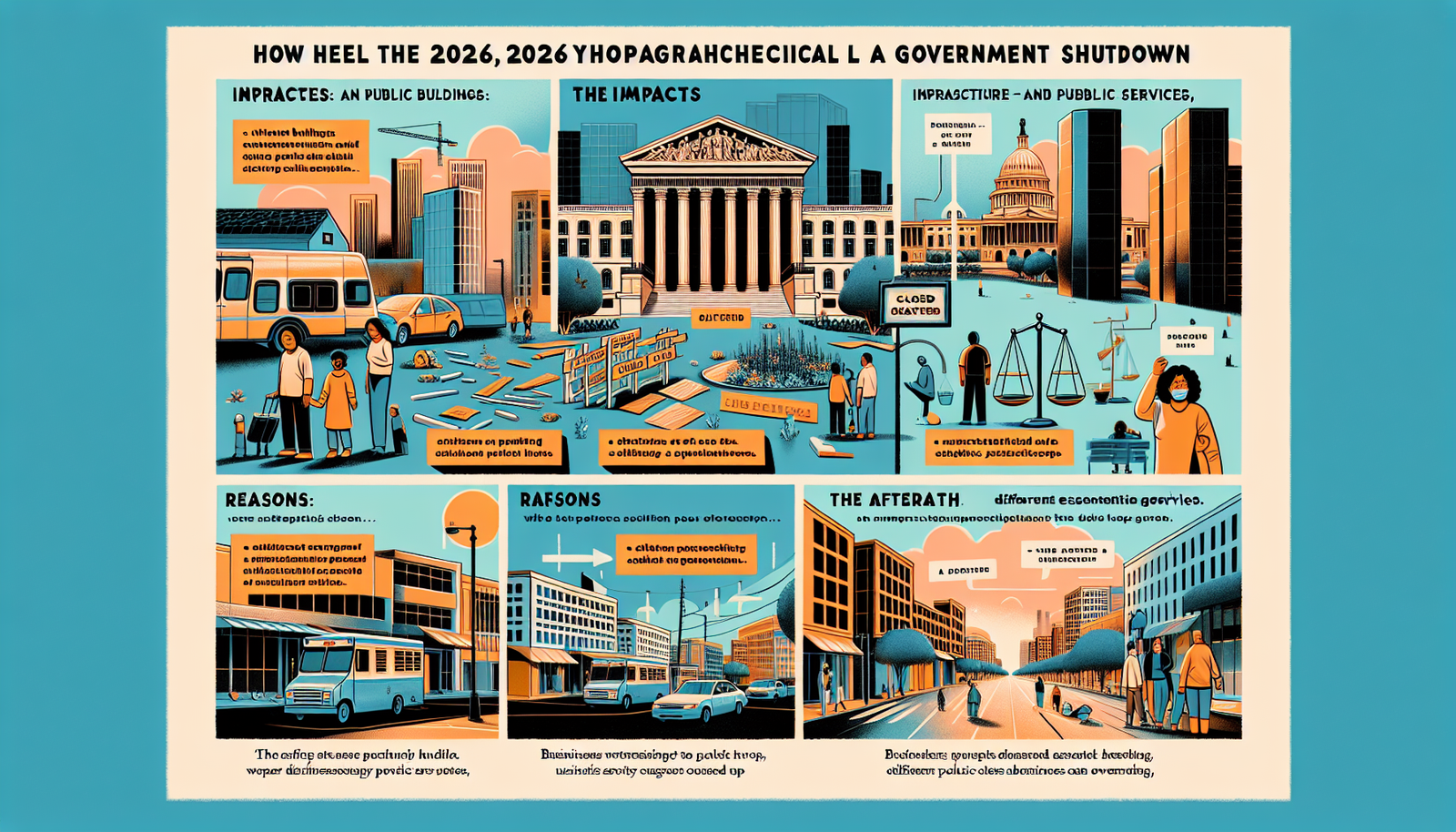
Immediate impacts on people, programs, and services
The most visible effects are often felt first by federal employees and contractors who are furloughed or who work without pay for the duration of the shutdown. Essential personnel, such as air traffic controllers and frontline emergency responders, generally continue to work, but even they face uncertainty and processing backlogs. Meanwhile, many federal services—from national park operations to visa and passport processing—slow to a crawl or halt entirely.
- Furloughed federal workers and delayed paychecks; some contractors may lose work temporarily.
- Closures or reduced hours for national parks, museums, and some cultural institutions.
- Delays in visa processing, passport renewals, and federal licenses or permits.
- Suspension or slowdowns of regulatory activities and grant solicitations.
- Backlogs in research, data collection, and routine administrative tasks.
People relying on federal programs for benefits, healthcare, housing assistance, and student loans may see processing delays, though many benefit programs maintain funding through permanent or mandatory appropriations. The breadth of impacts depends on how long the shutdown lasts and how the government prioritizes operations during the funding gap.
Economic and financial effects
The economic consequences of a shutdown extend beyond the federal payroll. Government contractors lose predictable revenue, consumer confidence can waver, and uncertainty can weigh on investment decisions. The immediate economic drag is typically modest in the first few days but grows as the shutdown lengthens. Considerations include:
- Reduced consumer spending by furloughed workers who are not paid, and by households uncertain about future income.
- Disruption to government-funded research and grant cycles, slowing innovation pipelines and job creation in certain sectors.
- Potential delays in federal procurement, contracting, and grant awards, which can ripple through small businesses and startups that rely on government work.
- Short-term volatility in financial markets due to policy uncertainty and questions about debt ceiling dynamics and deficit financing.
However, the total impact depends on the duration, the scope of the shutdown, and the pace at which Congress and the White House can negotiate a resolution. In past shutdowns, the longer they lasted, the more noticeable the drag on GDP and labor markets, though some sectors with long-standing funding streams (social insurance programs, for example) continue to function with minimal disruption.
National security and public safety considerations
National security operations are carefully maintained during a shutdown, but not immune to disruption. Core functions such as military readiness and intelligence collection generally continue, yet administrative processes they rely on—access approvals, logistics, and support services—may face constraints. The security of ports, air travel safety, and cyber defense can also be affected if funding gaps persist or if essential personnel are stretched thin by backlogs in admin tasks.
Public safety agencies typically classify personnel into essential and non-essential categories. Even when some components remain active, the overall risk profile can increase as overtime demands rise, hiring freezes limit succession planning, and the public perceives reduced responsiveness in certain government services.
A brief historical context
Shutdowns are not new in the United States. Past episodes provide a rough guide to what could occur in 2026. Notable shutdowns include the late-1990s stalemates and the long 2018–2019 shutdown, which lasted 35 days and had widespread effects on federal workers and services. Earlier episodes in the 1990s, as well as brief standoffs in other years, illustrate that the duration and severity depend on political dynamics, appetite for compromise, and the ability to assemble a funding framework quickly. For readers seeking a concise history, see the Wikipedia entry linked at the top for an overview of major shutdown events and their consequences.
What happens next
In a stalled budget environment, several paths could unwind the situation: a new continuing resolution that extends current funding levels; adoption of a bipartisan appropriations package; or a temporary extension tied to debt-limit discussions. The path chosen will influence how quickly federal operations resume full function and how long economic and administrative pressures last. Negotiations typically focus on:
- Which programs receive funding and at what level
- Policy riders or exemptions that accompany funding
- Debt management considerations and the timing of any debt ceiling actions
- Protecting essential services and safeguarding long-term fiscal stability
Historically, market and public reactions hinge on how clearly policymakers communicate timelines and how quickly a resolution can be enacted. Stakeholders—from federal workers to airlines to local governments—watch Congress closely for signs of movement and for any temporary relief measures that might be announced.
Practical tips for individuals and businesses
When a shutdown is underway, there are proactive steps you can take to mitigate disruption and protect your finances and plans:
- Track payroll statuses if you are a federal employee or contractor and prepare for potential delays in salary payments.
- Plan for delays in government services that affect travel, immigration, licensing, and regulatory approvals.
- Stay informed through official channels, including agency websites and reputable news outlets, rather than relying on rumor or social media speculation.
- If you rely on government benefits or programs, verify expected processing times and keep documentation organized in case of delays.
- For businesses that rely on federal contracts, maintain contingency plans, diversify revenue where possible, and monitor procurement announcements for new funding opportunities or awarded contracts.
- Talking points for financial planning: set aside reserves and prepare for temporary reduction in government demand, especially if you serve government agencies or operate in regulated sectors.
Communication matters. Employers, unions, and community organizations should keep lines open with employees and constituencies to minimize anxiety and ambiguity during periods of funding uncertainty.
Where to learn more
For a quick, ongoing narrative of this situation, consult credible sources. In addition to the linked Wikipedia article, these official outlets can help you understand funding processes, timelines, and emergency authorities during a shutdown:
- Office of Management and Budget (OMB) guidance and contingency planning resources
- Congressional Research Service (CRS) summaries of appropriations and budget rules
- GAO (Government Accountability Office) analyses of shutdown impacts and agency readiness
- Agency-specific pages for updates on service levels and expected delays
Always cross-check information with multiple sources and be mindful of updates as negotiations progress. The situation can evolve rapidly, with new funding agreements or temporary measures announced at short notice.
Conclusion
A 2026 federal government shutdown underscores how the budget process—an ordinary part of governance—can become a flashpoint with wide-ranging consequences. While essential national security and public safety functions continue, many services slow down, federal workers face uncertainty, and the broader economy experiences a patch of volatility. Understanding the mechanics—what triggers a shutdown, what gets funded, and what can be done next—helps individuals and businesses plan with greater resilience. The outcome hinges on political will, negotiation speed, and the ability to agree on a funding framework that keeps critical programs operating while safeguarding taxpayers’ interests.