Understanding the January 31, 2026 Partial U.S. Government Shutdown
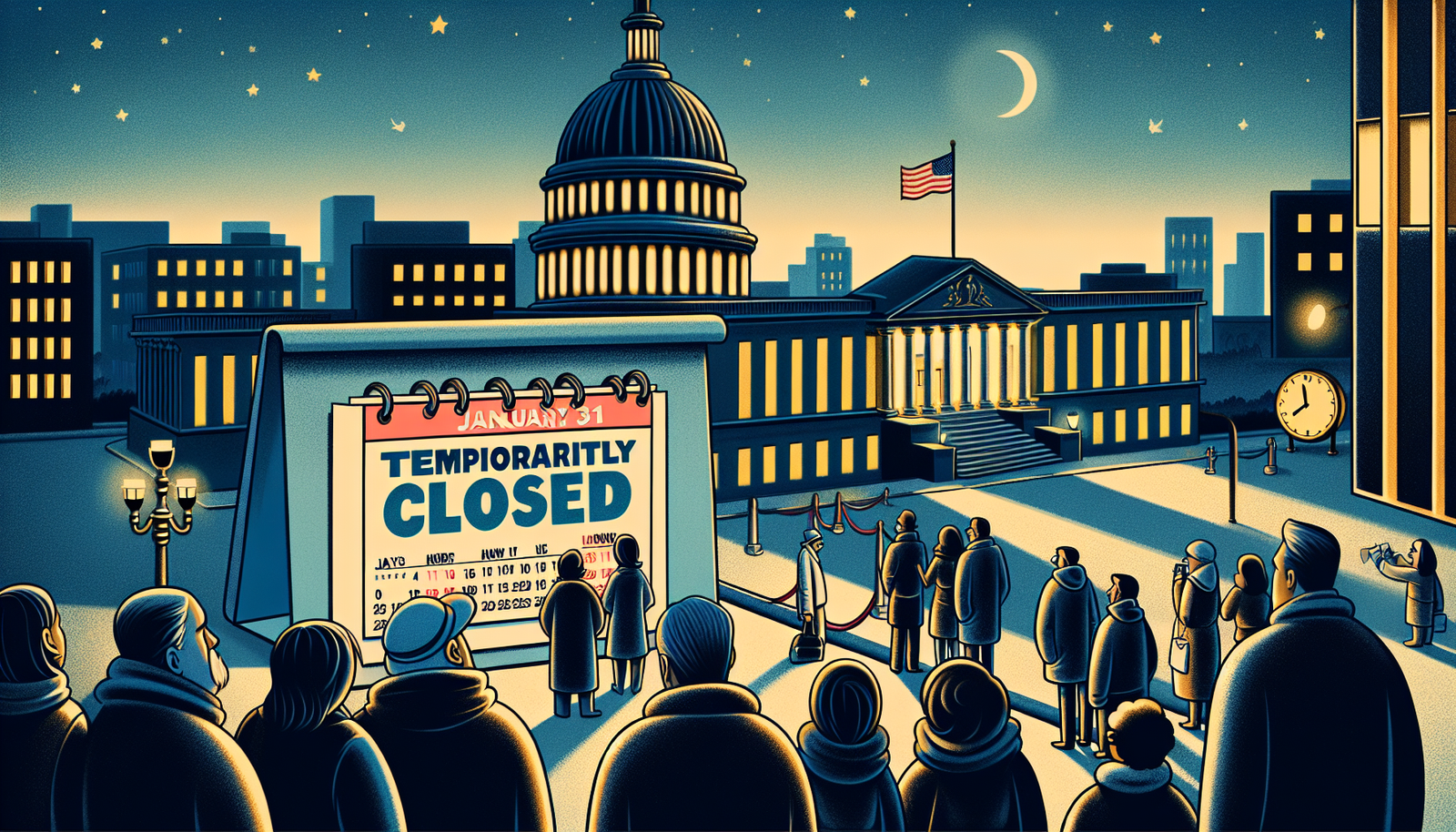
On January 31, 2026, the United States federal government began a partial shutdown after Congress failed to pass appropriations for the 2026 fiscal year. This article explains what a shutdown means, who is affected, and the potential economic and everyday-life implications. For background on the event, see reports covering the 2026 shutdown, including public summaries at Wikipedia.
What is a government shutdown, and what does “partial” mean?
A government shutdown happens when Congress cannot pass funding legislation for the new fiscal year. In the United States, operating funds for most federal agencies come from annual appropriation bills. When those bills are not enacted by the start of the new fiscal year, agencies typically do not have the legal authority to incur most new obligations. In a partial shutdown, some agencies or programs retain funding because they are supported by mandatory spending or existing appropriations, while others run out of cash and must suspend nonessential operations. Essential services—such as national security, public safety, air traffic control, and medical care for active-duty personnel—continue to operate at some level, but often with reduced capacity and delays.
In practice, a partial shutdown creates a two-tier system: essential personnel keep working (often with backpay depending on the resolution) and nonessential operations pause. Public-facing services may slow or halt, and contractors who depend on federal funding may experience payment delays. The exact mix of functions that stay open versus those that close can vary by agency, depending on funding status and agency-specific authorities.
For readers wanting a concise legislative view, continuing resolutions (CRs) or omnibus spending bills are typically used to unlock funding and end shutdowns. If Congress cannot enact a new CR or funding package, the shutdown can extend for days, weeks, or longer until a funding agreement is reached.
Why the 2026 shutdown occurred
While the exact political dynamics can differ from one cycle to the next, a shutdown generally results from Congress failing to agree on appropriations for the upcoming fiscal year. In the 2026 scenario, reports indicate that the 2026 funding bills did not pass before the start of the fiscal year, leading to a funding gap for many agencies. The stalemate often centers on differences over spending levels, policy riders, or dispute among chambers and the executive branch about priorities. Without a final funding package or a temporary CR, government activities funded by annual appropriations begin to wind down, and nonessential functions are suspended.
It is common for lawmakers to negotiate a temporary patch to keep critical programs running while a longer-term agreement is hammered out. The outcome depends on bargaining leverage, public pressure, and the political calendar, including the chances of the parties reaching a compromise before certain deadlines.
Who is affected?
A partial shutdown primarily affects federal workers, contractors, and the services that rely on annual appropriations. Broadly, workers designated as nonessential may be furloughed, while essential personnel—such as public safety officers, certain healthcare workers, and defense personnel—continue to work to protect life, property, and national security. Even among essential staff, pay is sometimes delayed if a funding solution is not enacted quickly.
Federal contractors can experience delays in payments and new contracts. Businesses that rely on federal funding for grants, loans, or procurement may face interruptions or uncertainty, which in turn can ripple through local economies that depend on federal activity. State and local government programs funded in part by federal money can also feel the impact, especially in areas like housing assistance, small business development, and environmental cleanup projects.
For individual Americans, the impact varies widely. Taxpayers who rely on federal services—such as visa and passport processing, application for federal loans, regulatory approvals, or certain benefits—can encounter delays. Conversely, programs funded by mandatory spending, such as Social Security, Medicare, and Medicaid, typically maintain their operations despite an appropriations gap, although processing timelines and customer service can be affected by reduced staffing.
Public services most likely to slow or halt
Depending on the agency and current appropriations status, several commonly affected services may slow down or pause. Examples from prior shutdowns include:
- National parks, monuments, and other public lands closures or limited access due to funding gaps in the National Park Service and related entities.
- Processing delays for immigration benefits, visas, and foreign nonimmigrant entries as the Department of Homeland Security and State Department scale back nonessential operations.
- Passport and visa services, including routine processing, may be delayed or suspended in some offices.
- Certain scientific and regulatory activities that rely on annual appropriations may pause, as can routine inspections and grant-funded programs.
- Suspension or slowdown of nonessential regulatory actions and inspections in some agencies.
In contrast, programs funded by mandatory spending or by funds that do not lapse during a government shutdown (for example, Social Security and Medicare benefits) typically continue, though customer service lines and processing centers may operate at a reduced pace if staffing is constrained.
Economic and market implications
A shutdown—partial or full—can have immediate and longer-run effects on the economy. In the short term, consumer confidence can waver, stock markets may experience volatility, and government data releases may be delayed. When federal hiring and contracting slow, consumer spending can dampen, particularly in communities with high concentrations of federal workers or contractors.
The broader macroeconomic impact hinges on the duration of the shutdown and the extent to which private-sector activity depends on federal funding. If the shutdown persists, GDP growth can decelerate as federal spending holds back, government procurement contracts face delays, and the timing of grants and loans becomes uncertain. The potential knock-on effects for small businesses, municipalities, and research institutions can be substantial if a large share of government-funded activities are paused.
It is worth noting that some macroeconomic channels may mute the impact. Tax revenues continue to flow, Social Security and other mandatory programs typically remain funded, and the private sector often adapts by accelerating non-federal projects or seeking private financing. Still, the overall risk to economic momentum grows with the duration of the funding gap.
What happens next—how shutdowns usually end
The end of a shutdown almost always comes when Congress and the White House agree on a funding framework. That framework could take the form of a short-term continuing resolution to buy time while lawmakers finalize a longer-term package, or a full omnibus appropriations bill that funds all federal agencies for the remainder of the fiscal year. Negotiations often involve tradeoffs among spending levels, policy riders, and priorities that differ across chambers and the executive branch.
In many past shutdowns, workers have received backpay after funding is restored, and some services resume with varying speeds as agency staffing returns to normal. The timeline can depend on the complexity of the agreement and the readiness of each agency to ramp back up operations. The longer the stalemate, the greater the risk of disrupted services, delayed data releases, and economic spillovers.
How to stay informed and plan ahead
When a shutdown begins, the best sources for up-to-date information are official government channels and credible news outlets. Useful resources include the Office of Management and Budget (OMB), the Government Accountability Office (GAO), USA.gov, and agency-specific communicate channels. If you are a federal employee, your agency’s intranet and human resources office will provide instructions on leave status, pay, and benefits.
For travelers and those relying on federal services, check status updates before visiting agencies or making plans that depend on government processing. This is particularly important for immigration services, passport offices, and public facilities such as national parks and museums.
Businesses that work with the federal government should review their project timelines, contracts, and cash flow. They may need to adjust staffing plans, timelines for grant disbursements, or procurement schedules as funding clarity emerges.
Practical tips for individuals and organizations
- Monitor official updates from the White House, OMB, and the relevant federal agency about funding status and operational changes.
- Prepare for potential delays in processing services (visas, passports, licenses) by planning ahead and applying early when possible.
- If you are a federal employee, understand your furlough status and any potential backpay provisions in a forthcoming funding agreement.
- For businesses, reassess cash flow and contract schedules, and communicate with federal customers and suppliers about potential delays.
- Stay informed through reputable outlets and avoid rumor-driven decisions that could mislead planning efforts.
Frequently asked questions
Q: Do Social Security and Medicare benefits stop during a shutdown?
A: Generally, mandatory programs like Social Security and Medicare continue to operate and pay benefits, but some customer-service operations may see delays due to staffing constraints.
Q: Will federal workers be paid back for days off?
A: In many past shutdowns, furloughed workers receive backpay after funding is restored. The final payback depends on the funding agreement reached by Congress and the President.
Q: How long can a shutdown last?
A: There is no fixed limit. It ends when a funding agreement is enacted, which can be days, weeks, or longer depending on negotiations and legislative tactics.
Q: Does this affect all government programs?
A: No. Programs funded by mandatory spending or existing appropriations often continue. The impact is uneven and depends on each agency’s funding structure and the nature of its programs.
Q: Where can I check for official updates?
A: Check federal agency websites, USA.gov, and reputable media outlets. Agency-specific portals usually post status updates for the public and for employees.