Understanding the 2026 US Federal Government Shutdown: Causes, Impacts, and What Comes Next
Overview: Why a partial shutdown occurred on January 31, 2026
On January 31, 2026, the United States federal government entered a partial shutdown after Congress failed to pass appropriations legislation for the 2026 fiscal year. In plain terms, many federal agencies ran out of one-time operating funds because lawmakers could not complete a year-long funding package or a temporary stopgap measure in time. The result is not a single event but a chain of immediate, practical consequences that ripple through government services, the economy, and the lives of federal workers and ordinary Americans who rely on government programs.
This post explains what a partial shutdown is, why it happened in early 2026, what typically happens next, who is affected, and what individuals and businesses can do to navigate an ongoing funding stalemate. While the specifics of a 2026 budget crisis may evolve, the basic mechanics—budget battles, continuing resolutions, and the alternating pressures of politics and policy—remain consistent with prior episodes in U.S. history.
What triggers a federal government shutdown—and how a partial shutdown works
The United States operates on a system of annual appropriations. Congress must pass twelve regular appropriations bills or an overarching continuing resolution (CR) to fund the government. When such legislation is not enacted by the start of the fiscal year, agencies generally begin to shut down nonessential functions, and many federal employees are furloughed. In a partial shutdown, some essential operations continue (such as national security, public safety, and certain health programs), while nonessential services suspend operations and many public-facing programs pause.
A shutdown does not mirror a full bankruptcy or a complete halt of all activity. Agencies retain authority to perform essential tasks to protect life and property. In practice, the timetable is defined by agency contingency plans, the pace of court rulings on essential services, and how quickly the executive branch can direct resources. The political dynamic—whether Congress can agree on a spending package or what form a CR might take—largely determines how long the disruption lasts.
Who is affected?
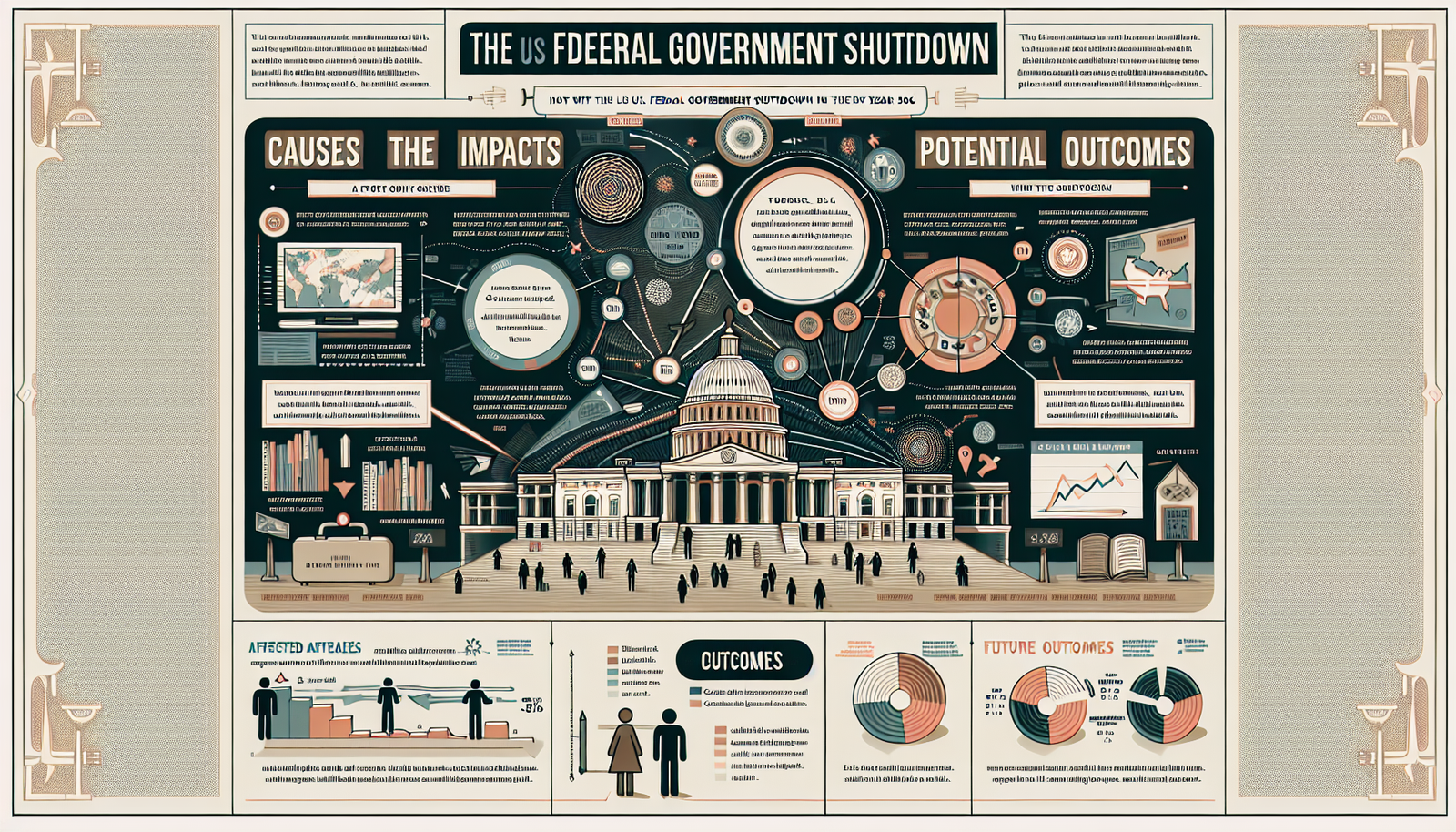
A shutdown of any magnitude touches multiple groups. At a high level, you can think of three primary circles of impact: federal workers, contractors and recipients of federal programs, and the commuters and communities that rely on government services.
- Federal employees: Nonessential staff are furloughed, and many must stay home without pay while essential personnel continue some operations. This can affect pay timing, benefits processing, and morale during a period of policy uncertainty.
- Government contractors: Companies that depend on federal contracts may see delayed payments and disrupted work schedules as contract officers prioritize ongoing operations and critical obligations.
- Public services: National parks and museums may close or limit access; passport, visa, and federal benefit processing can slow or pause; and some regulatory and enforcement activities may scale back temporarily.
- Researchers and data users: Economic data releases, census updates, and other statistical programs may be delayed, affecting markets, policy analysis, and private-sector decision making.
- State and local governments: While not directly funded by the federal payroll, many programs rely on federal funding or guidance, and delays can complicate state budgets and local services.
It is important to note that the severity of a shutdown’s impact depends on the length of the disruption, the size of the affected agency, and the protections built into agency contingency plans. Some agencies may operate with a skeleton staff to meet legally mandated duties, while thousands of civilian employees may experience furloughs. The public-facing consequences—delayed tax refunds, stalled research grants, or longer passport processing times—tend to accumulate quickly as the shutdown persists.
Economic and market implications of a partial shutdown
A government shutdown is, at its core, a political event that creates practical economic friction. The size of the impact depends on how long the crisis lasts and how far financial markets, consumer confidence, and business planning anticipate a resolution. Here are several channels through which a 2026 partial shutdown could influence the broader economy:
: A period of reduced government spending and delayed federal data releases can weigh on quarterly growth, especially if the pause is longer than a few weeks. - Market volatility: Financial markets may respond to uncertainty about funding, policy outcomes, and the timeline of a potential deal. Bond yields, stock prices, and currency values can shift in reaction to headlines and inferred odds of a resolution.
- Federal data timing: Key indicators—from unemployment claims to inflation gauges to housing statistics—may be delayed, complicating private-sector planning, investor decisions, and policymaking by the Federal Reserve.
- Credit markets and consumer behavior: A shutdown might influence borrowing costs or consumer sentiment, particularly if households worry about tax refunds, benefits, or entitlement programs that rely on federal administration.
- Supply chain and government contracting: Delays in government procurement and payment cycles can ripple through contractor cash flow and downstream supply chains, especially for small businesses dependent on government contracts.
It’s worth noting that the United States has weathered shutdowns before, and lawmakers have historically used continuing resolutions or omnibus spending measures to avert a long-term economic shock. Nevertheless, the immediate uncertainty and operational frictions typically shave at least a few tenths of a percentage point off quarterly growth and can disrupt market expectations until a funding agreement is reached.
Timeline and uncertainty: how long might this last?
The duration of a shutdown is inherently uncertain and depends on political dynamics, the willingness of both parties to compromise, and any external negotiations tied to adjacent issues such as the debt ceiling or policy riders. In the past, partial shutdowns have lasted anywhere from a few days to several weeks. The crucial question for markets and households is not only how long the disruption persists, but whether a short-term CR or a larger funding package is achieved that allows agencies to return to full operation.
During the initial days, agencies typically focus on preserving life and property—i.e., public safety, national security, and essential health services—while nonessential operations scale back. As time passes, the backlog of routine tasks often grows, creating a cumulative delay in services that many people rely on, from veterans’ benefits to research grants. If the stalemate continues, the likelihood of a longer disruption increases, and congressional leaders face mounting pressure to pass a consensus measure.
Historical context: lessons from prior shutdowns
The United States has experienced multiple federal shutdowns since the 1970s, each with its own political texture. Common threads include a gamble between prioritizing certain expenditures and making broader political statements, the political cost of a prolonged pause for lawmakers, and the practical reality that essential government functions must continue regardless of budget battles. A few recurring themes emerge from past events:
- Public patience wears thin: Prolonged interruptions in services—such as passport processing or federal benefits—tend to intensify public scrutiny and press demands for a resolution.
- Economic sensitivity: Financial markets and business communities often react quickly to the specter of uncertainty, especially if the shutdown intersects with other fiscal deadlines (like the debt ceiling) or major policy changes.
- Policy signaling: The outcome of budget fights can shape perceptions about fiscal discipline, congressional cooperation, and the administration’s ability to deliver on priorities.
While history does not guarantee future outcomes, it offers a framework for understanding what to expect in the near term and why a timely resolution matters for stability and confidence. Analysts monitor indicators such as the pace of negotiations, the presence of bipartisan agreement on a CR or omnibus, and the readiness of agencies to resume full operations once funding is enacted.
What happens next—and how the path forward is shaped
The immediate focal point after a partial shutdown is the next funding decision. Here are the common routes lawmakers pursue:
- Temporary funding (CR): Congress passes a continuing resolution that extends current funding levels for a set period while negotiations continue. A CR buys time but defers policy decisions and can increase political risk if it becomes a precedent for delaying tough choices.
- Omnibus funding bill: Lawmakers assemble a comprehensive funding package addressing all federal agencies and programs, sometimes with policy riders. An omnibus can provide certainty for the government and the public but may require difficult compromises to attract enough votes.
- Protracted stalemate: If negotiation stalls, the shutdown can extend, worsening public services disruption and economic uncertainty. In such a scenario, the political calculus often shifts toward a higher-stakes bargaining position, potentially tying funding to broader legislative goals.
The outcome often hinges on factors like bipartisan compromise, leadership willingness to compromise, the economic and social costs of inaction, and external events that push lawmakers toward a resolution. In past episodes, the speed and content of a funding agreement have varied widely—sometimes reflecting broad bipartisan consensus, other times reflecting narrow partisan deals with limited policy changes.
Guidance for individuals and businesses during a shutdown
If you are a federal employee, contractor, or a private-sector partner affected by government shutdowns, the following practical steps can help you navigate the uncertainty:
- Stay informed: Rely on official sources for salary, benefits, and status updates. Sign up for agency alerts and check.gov pages regularly for the latest guidance.
- Budget and cash flow planning: If you anticipate furloughs or delayed payments, review your household budget and build a small emergency buffer. Businesses tied to federal funding should assess cash flow and explore mitigation strategies with clients and suppliers.
- Benefit timing: Some benefits (e.g., Social Security payments) are protected by law and continue during partial shutdowns, but processing staff may be reduced. Check the status of benefits if you rely on these programs.
- Tax and financial planning: Tax-related services and financial planning can experience delays. Plan for potential delays in refunds or program updates that affect your filings and investments.
- Employer communications: If you are a federal employee, maintain contact with your HR department for timelines on pay and benefits. For contractors, document work performed and communications with contracting officers to safeguard payment rights.
- Travel and permits: Airport and border processing might see changes in staffing or schedules. Check visa, passport, and border guidance if you have imminent travel plans.
If you are a small business that relies on federal grants or contracts, consider engaging with liaisons at the relevant agencies, requesting updated project calendars, and building contingency buffers. In many past shutdowns, the private sector used the downtime strategically to reallocate resources and prepare for the restart when funding returns.
Bottom line: What this means for the 2026 budget cycle
A partial shutdown is not a permanent economic event; it is a policy-driven pause that can become extensive if funding negotiations stall. For families and businesses, the key is preparation, keeping informed, and understanding that the government’s operational focus during a shutdown centers on safety, security, and the orderly management of critical programs. The eventual resolution—whether a CR or a comprehensive funding bill—will restore normal operations, but the experience tends to influence market expectations, policy discussions, and the political climate in the months following the event.
As coverage of the 2026 funding stalemate continues, readers should watch for official announcements from the White House, Congress, and federal agencies. These sources provide the most reliable guidance on pay schedules, eligibility for benefits, and the timeline for resuming full government services.