The 2026 Partial Government Shutdown: Causes, Impacts, and Lessons
Introduction: why a shutdown matters
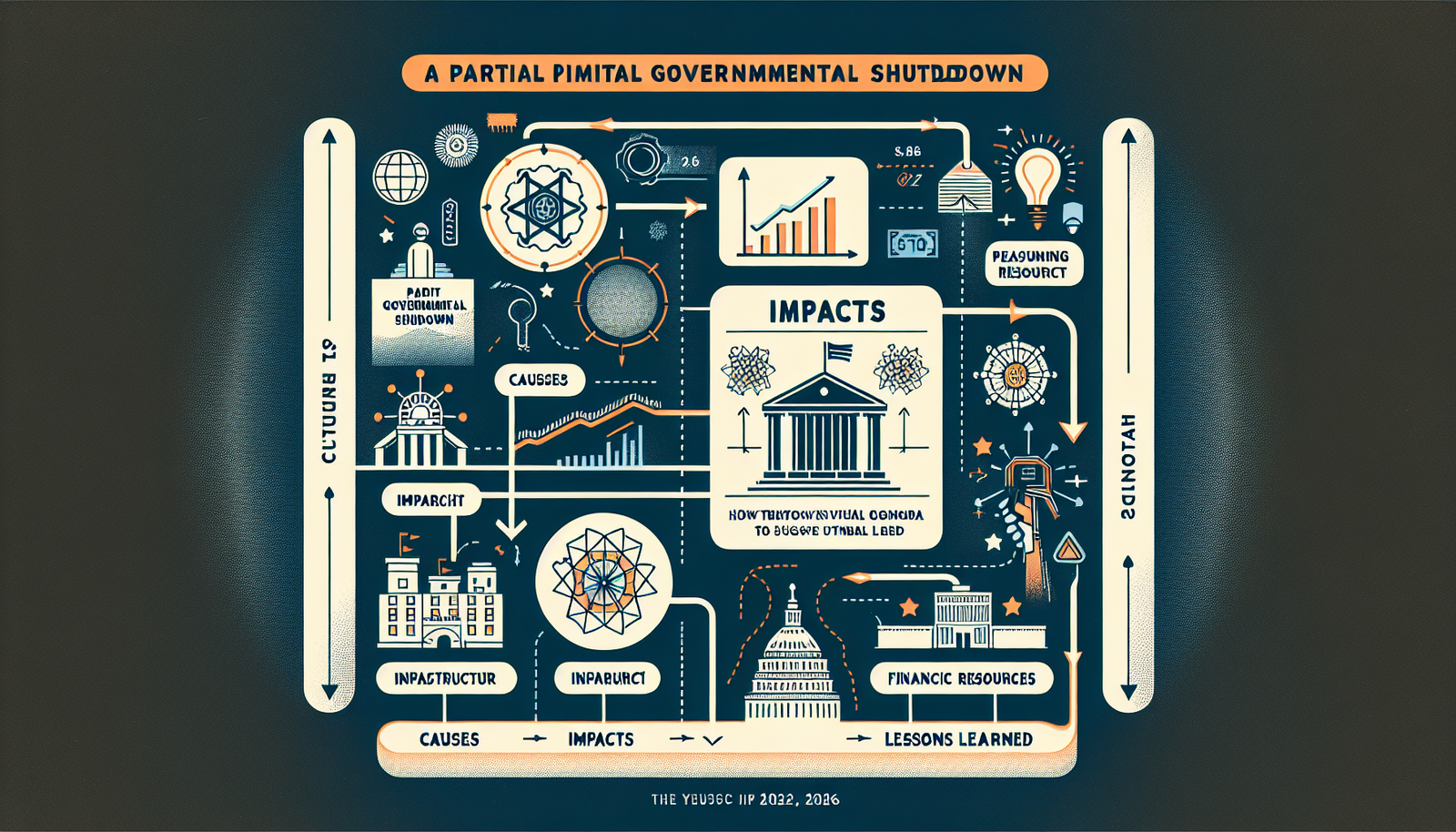
On January 31, 2026, the United States federal government effectively entered a partial shutdown after Congress failed to pass appropriations legislation for the 2026 fiscal year. While a true shut‑down is not desirable for any nation, this hypothetical scenario helps illuminate what happens when a budget dispute pauses funding for nonessential government operations while essential functions continue.
In the classic sense, a government shutdown is the result of Congress not providing discretionary funding for one or more federal agencies and programs. The executive branch then has to implement a partial pause on nonessential activities, furlough nonessential employees, and delay or curtail a range of services. The consequences ripple through the economy, affect public services, and create political pressure to reach a budget agreement. This piece walks through how we got here, what changed on the ground, and what reforms could reduce the odds of a repeat both in the near term and across cycles.
How federal funding works, in normal times
The United States funds its government through a mix of annual appropriations bills, continuing resolutions (CRs), and mandatory programs. Each fiscal year begins on October 1, and Congress typically passes 12 separate appropriations bills that fund agencies, programs, and operations for the year. When lawmakers fail to adopt all 12 bills by the start of the year, they often pass a CR to keep the government running at existing funding levels while negotiations continue. A failure to resolve funding can lead to a shutdown, with the scale and scope of disruption depending on how many agencies and programs rely on discretionary funding.
The distinction between essential and nonessential operations matters a great deal. Essential activities — like national security, law enforcement, emergency medical care, and air traffic control — generally continue to operate, though with limited staff. Nonessential functions — many routine administrative services, international cultural programs, and some environmental projects — face furloughs or service suspensions, and contractors may stop work.
Discretionary funding covers most day‑to‑day operations of federal agencies. Mandatory programs (like Social Security, Medicare, and unemployment insurance) are funded by dedicated budgets and are not typically affected by short‑term CRs, though minor administrative slowdowns can occur if related processing systems are affected. In practice, even a CR or partial shutdown can still create backlogs and delays that reverberate across the economy and daily life.
Timeline of events in this scenario
- Late January 2025–January 2026: Budget negotiations stall as competing priorities dominate congressional debates. A series of partial maneuvers, including temporary CRs, keeps some government operations funded but leaves other areas uncertain.
- January 25–30, 2026: Negotiations intensify, but partisan divides prevent a final agreement on the 2026 appropriations bills. Several key policy disputes—defense funding levels, climate and energy programs, immigration enforcement, and domestic discretionary spending—become sticking points.
- January 31, 2026: Congress fails to pass a comprehensive appropriations package. The executive branch terminates funding for nonessential operations in several agencies, triggering a partial shutdown. Essential missions continue with skeleton staffs while federal workers facing furloughs receive notices or recall orders as needed.
- Early February 2026: Furloughs and back‑office backlogs begin to surface in affected agencies. Public services such as passport processing, national park operations, and some regulatory functions experience delays. Essential functions like national security and health emergencies persist, though with potential strain on resources.
Impacts on people, services, and the economy
A partial shutdown typically produces a two‑track reality: essential government work continues, but many routine tasks slow or halt. In this scenario, federal workers face furloughs, contractors lose paid work or are asked to halt projects, and the public encounters delayed services that many Americans rely on daily. The precise consequences depend on which agencies are funded and which programs are deemed nonessential. Some common effects include:
Furloughed employees stop receiving paychecks, potentially leading to personal financial stress. Some agencies manage back‑pay during subsequent funding, but cash flow can be disrupted for weeks. Passport processing, visa applications, and certain tax services may slow as workers and resources are redirected or reduced. National parks may close or restrict access, impacting tourism and local economies near park sites. Audits, inspections, and regulatory reviews may be delayed, affecting industries that depend on timely approvals or compliance checks. Core national security and health programs continue, but emergency response capabilities and preparedness budgets can experience strain when staff levels are constrained. Financial markets often react to the prospect of a prolonged budget battle. Uncertainty can dampen investment, consumer confidence may waver, and small businesses that rely on federal programs or regulatory approvals can experience delays in planning and cash flow.
Over time, the cumulative effect of a partial shutdown—on consumer confidence, hiring, and federal program effectiveness—can influence the broader economy. For instance, a sustained slowdown in regulatory approvals or a backlog in visa processing can affect international travel, trade, and the ability of companies to hire or expand operations. While some Americans may experience only mild disruption, others—particularly those relying on federal services or working for the government—face real financial and logistical challenges.
Agencies and programs most commonly affected in a partial shutdown
Agencies that rely heavily on discretionary funding and do not perform emergency operations at the same scale as defense or public safety often bear the brunt of a partial shutdown. In this scenario, examples of affected agencies might include:
- Departments of Commerce, Education, Housing and Urban Development, Interior, Labor, and State to varying degrees, depending on the scope of the CR and the status of essential services.
- Agencies responsible for national parks, science and research programs, and cultural affairs may see closures or reduced operations (e.g., national park sites, museums, scientific research facilities).
- Some regulatory agencies and grant programs that rely on annual appropriations could experience delays in processing and funding decisions.
It’s important to emphasize that essential services — including national security, public safety, emergency medical care, and operations critical to core infrastructure — continue to function, albeit under tight resource conditions. The boundary between essential and nonessential is defined by law, policy, and the specific funding gaps at the time.
Lessons learned and policy options to reduce risk
A recurring risk in U.S. budgeting is the overreliance on last-minute appropriations or short‑term fixes when negotiations stall. Each shutdown or near‑shutdown introduces a set of avoidable costs: backlogs, lost productivity, reduced trust in government, and the political toll of a policy standoff. Several policy options are frequently discussed by scholars and practitioners as methods to reduce the likelihood or impact of shutdowns:
Establishing a pre‑authorized CR that kicks in if negotiations lag could prevent abrupt service disruptions, though it may not satisfy all political demands. Strengthening bipartisan budget rules to require earlier and more transparent agreement on discretionary funding levels, with binding timeframes for negotiation and final passage. Clarifying and stabilizing mandatory funding streams to minimize bleed‑over into discretionary accounts, easing the operational pressure during budget crises. Reassessing and potentially sunsetting nonessential programs on a rolling basis to ensure continuity and prioritize core services. Requiring agencies to maintain buffer staffing, critical supply chains, and emergency reserves to cushion the impact of funding gaps.
Beyond procedural fixes, there is a broader call for fiscal reform that aligns spending with national priorities, improves accountability, and reduces the political theatrics that undermine effective governance. For readers and stakeholders, this means staying informed about the budget process, engaging with representatives, and supporting reforms that promote timely and predictable funding.
Public policy implications and societal considerations
When a partial shutdown occurs, the focus often shifts to the day‑to‑day consequences for citizens: delays in services, uncertainty for federal contractors, and reduced workforce morale. But the episode also raises deeper questions about the social contract and the design of government. For example:
Is it better to have a clear, multi‑year funding framework that minimizes recurring crises, even if it means accepting political compromises? Programs serving low‑income families, veterans, students, and rural communities may face disproportionate adverse effects if funding gaps are prolonged or poorly executed.
The real test of any budget system is not only how it allocates resources, but how it communicates priorities and maintains essential services. A shutdown, even a partial one, is a stress test of governance, transparency, and resilience.
What this means for readers and policymakers
For readers, understanding the mechanics behind a shutdown helps demystify why some services halt while others continue. For policymakers, the episode underscores the importance of predictable funding and pragmatic negotiations. The January 31, 2026 scenario illustrates several concrete truths:
- The budget process is inherently political, but its consequences are concrete and personal.
- Delays in funding can create operational backlogs that ripple through the economy and public life long after funding resumes.
- Even short gaps in discretionary spending require deliberate contingency planning to minimize harm to the public and markets.
Conclusion: toward a more resilient budget process
The hypothetical January 2026 partial shutdown serves as a reminder that budgeting is not simply a numbers exercise; it is a governance test with real-world consequences for workers, families, and communities. While emergencies and conflicts over priorities are inevitable in a dynamic political system, the goal should be to reduce unnecessary volatility through better processes, clearer rules, and more robust contingency planning. If Congress and the administration can agree on mechanisms that prevent last‑minute brinksmanship and ensure the core operations of government remain uninterrupted, the costs of disagreement can be substantially mitigated.
For readers who want to follow the budget process and advocate for reform, a few practical steps include tracking appropriations hearings, supporting transparency in budget negotiations, engaging with elected representatives on civil service protections and agency discretion, and promoting policies that protect essential services even amid political gridlock.