
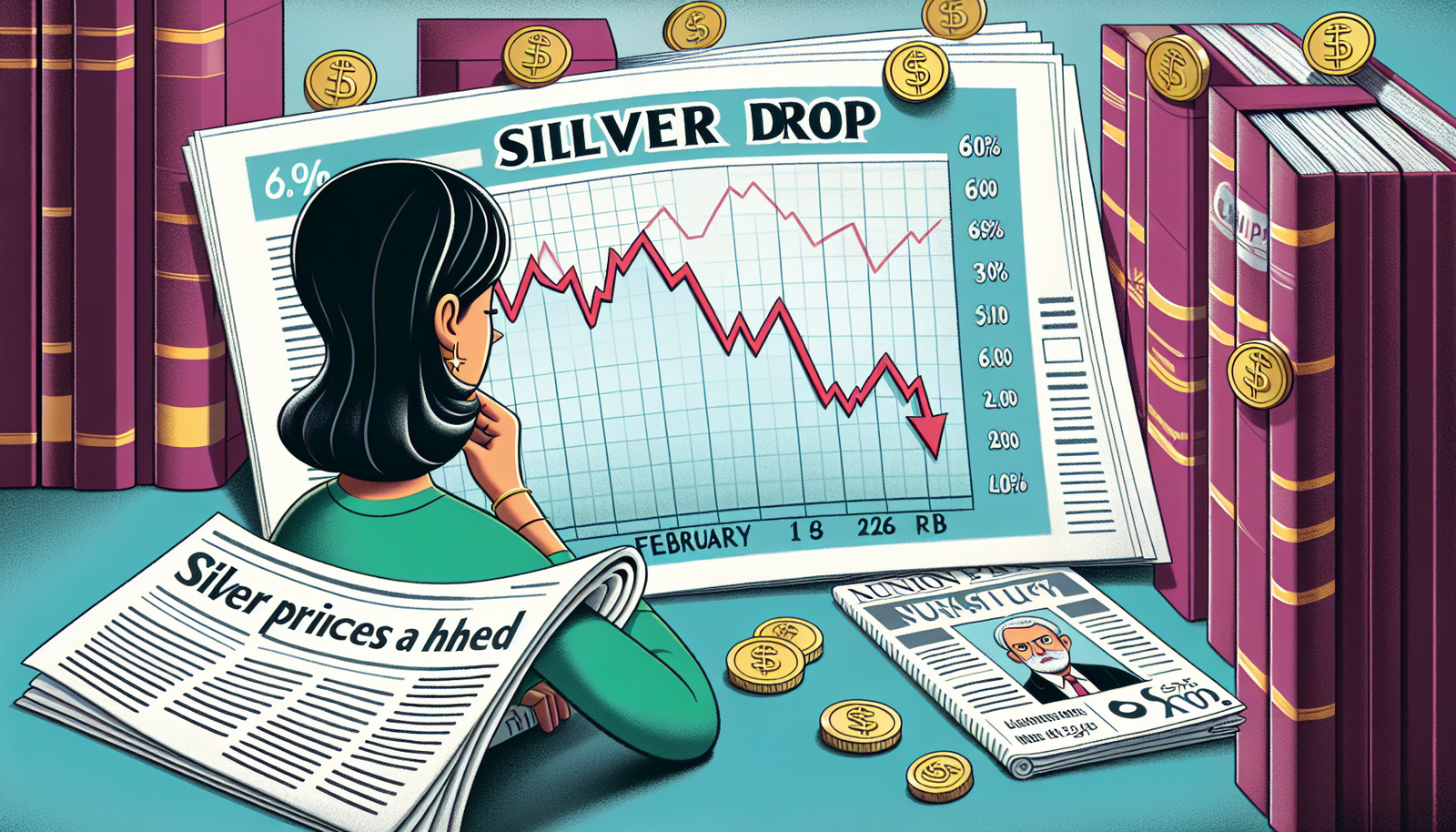
Overview: A 6% Slump in Silver Prices Before the Union Budget 2026
Silver prices in India opened the trading session on February 1 with a sharp move lower, slipping about 6% to ₹2,74,410 per kilogram, before easing slightly as the market priced in expectations from the upcoming Union Budget 2026. The move, reported by Moneycontrol, underscored how the budget mood can quickly translate into volatility for precious metals. For investors and jewelry buyers alike, this is a reminder that budget headlines often drive short-term sentiment, even when broader macro fundamentals remain complex.
Understanding the Context: Why Silver Reacts Strongly to Budget Signals
Silver, like gold, is a precious metal that trades at the intersection of macroeconomics, currencies, and domestic policy. In India, the budget season often acts as a catalyst that can shift the appetite for inflation hedges and non-yielding assets. Several channels explain the sensitivity:
- Currency and import dynamics: India imports a large portion of its silver requirements. Any shift in the rupee’s value relative to the dollar, or changes in import duties and duties exemptions, can alter landed costs and, ultimately, domestic prices.
- Tax policy and incentives: Budget announcements related to duties on precious metals, GST on jewelry, or changes in incentives for manufacturing and exports can influence consumer demand for silver and the investment appetite in bullion and coins.
- Inflation and the real yield landscape: Rising or falling inflation expectations, and shifts in real yields, steer investors toward or away from non-yielding assets like silver.
- Seasonality and demand cycles: The wedding season, festivals, and industrial demand cycles in the Indian market influence silver’s trajectory, often amplifying the impact of macro news during budget weeks.
In simple terms, a budget rally or sell-off can either dampen or amplify the appeal of silver as a hedge or a speculative asset, depending on the policy signal and the broader economic backdrop. The February 1 price action can be seen as a reaction to evolving expectations about tax policy, import costs, and how the government intends to support or regulate the jewelry and handicrafts sector that uses substantial silver inputs.
The Budget Lens: What Investors Will Be Watching
As Budget 2026 approaches, investors will parse several likely focal points that have historically influenced silver and other precious metals in India. While no forecast can guarantee a directional move, the following areas tend to drive sentiment:
- Import duties and duties exemptions: Any changes to customs tariffs on silver bars and related inputs can alter the cost structure for refiners, jewelers, and retailers, affecting wholesale and retail prices.
- GST rate and compliance relief: Clarity on Bhavya Gold/Silver Schemes, GST on finished jewelry, and potential simplifications in compliance can shift consumer demand dynamics for silver jewelry and investment pieces.
- Credit and financing support for manufacturing: Policies that ease credit flow to the domestic jewelry and electronics sectors can buoy demand for silver put to use in these industries.
- Macro-stability signals: Fiscal discipline, inflation expectations, and monetary policy guidance can shape the perceived risk of holding non-yielding assets like silver.
For traders and long-term holders, the takeaway is not a single policy change but the broader direction the Budget sets regarding inflation control, consumer demand, and the domestic manufacturing ecosystem. If the Budget signals a favorable climate for manufacturing and domestic consumption, silver might stabilize or recover as investors gain confidence in the sector’s resilience. Conversely, a hawkish or protectionist tilt could pressure silver prices higher in the near term as a hedge against policy risk, or push investors toward other assets depending on the cross-currents in global markets.
Domestic silver prices do not move in isolation. The price at ₹2,74,410 per kilogram on February 1 should be viewed in the context of a global backdrop and local demand fundamentals. Some of the key drivers include:
- Global silver markets and dollar dynamics: Silver priced on the COMEX and other global venues often reflect the broader risk appetite. A stronger U.S. dollar can weigh on silver as a non-yielding asset, while a softer dollar can support silver demand. In a budget week, global risk sentiment can amplify these moves, depending on how markets interpret the Budget’s inflation and growth outlook.
- Industrial demand for silver: Beyond investment demand, silver plays a critical role in electronics, solar panels, and various industrial applications. Any cyclical demand shifts, particularly from export-oriented sectors, can influence the overall price trend.
- Rupee strength or weakness: The Indian rupee’s movement against the dollar affects landed costs for imports. A strengthening rupee can soften domestic silver prices even if global prices are stable or rising, while a weak rupee can have the opposite effect.
- Gold-silver price relationship: Historically, gold and silver move in a correlated fashion to some degree, especially during periods of macro uncertainty. Traders often watch gold to gauge risk sentiment, which can spill over into silver markets.
On February 1, decisions and expectations around the Union Budget 2026 likely played into a risk-off tilt in the early trading hours, contributing to the 6% decline. As markets digest policy signals, prices often find a new equilibrium once there is clarity on the policy framework and its fiscal implications.
What This Means for Investors: Strategies in a Budget-Driven Environment
For investors, price volatility around Budget time can create both risk and opportunity. Here are practical considerations to navigate the current environment:
- Long-term positioning vs. short-term trading: If you are investing for the long term, temporary budget-driven spikes or dips may be less important than your core thesis about silver’s role in a diversified portfolio. Short-term traders may look for technical setup confirmations before entering or exiting positions.
- Asset allocation and hedging: Consider silver as part of a broader precious metals sleeve rather than a sole investment. If your portfolio includes equities that are sensitive to inflation or interest rates, silver can provide diversification benefits during periods of macro uncertainty.
- Physical vs paper silver: Physical silver (bars/coins) carries storage costs and liquidity considerations, while futures, options, and exchange-traded instruments offer leverage and liquidity but come with higher risk. Your choice should reflect risk tolerance, time horizon, and access to reliable storage and security.
- Risk management: Set price alerts, determine stop-loss levels for leveraged plays, and be mindful of liquidity during budget weeks when spreads can widen. Always verify the bid-ask spread and check the liquidity of the instrument you choose to trade.
In the Indian context, budget-driven moves can impact consumer sentiment for jewelry purchases in the weeks surrounding the Budget. A positive budget stance may spur wedding-season demand and consumer buying, potentially lifting silver prices later in the quarter. Conversely, if the Budget imposes constraints or signals tighter liquidity, consumer demand could soften, pressuring both physical and investment silver prices in the near term.
Practical Guidance for Tracking Silver Prices in India
Staying on top of price movements requires a mix of real-time data, reputable news sources, and a clear strategy. Here are pragmatic steps to monitor and react to budget-driven volatility:
- Real-time price feeds: Use trusted financial portals and broker feeds that provide live or near-real-time silver prices in rupees per kilogram. Look for data that includes bid/ask spreads and volume so you understand liquidity in a given session.
- Follow the budget timeline: Track announcements, interim budget updates, and policy clarifications as the Budget week progresses. Even small policy notes can trigger quick price swings in the precious metals market.
- Pay attention to currency moves: Monitor USD/INR and the dollar index (DXY) as they are often the largest external drivers of domestic precious metal prices.
- News sources and market commentary: Rely on multiple reputable sources for context. A single headline can mislead if not placed within the broader policy and macro narrative.
- Technical levels to watch: Identify key support and resistance zones, moving averages (e.g., 50-day and 200-day), and trend channels. In budget-driven markets, technicals can help you time entry and exit more effectively than headlines alone.
For Indian investors, local sources such as bullion dealers, jewelry trade associations, and currency-market reports can provide additional color on domestic demand and supply dynamics around budget events.
Looking Ahead: The Path for Silver Through Budget 2026
While it is tempting to treat budget week as a pure trigger for a short-term move, the longer-term narrative for silver rests on several intertwined factors. If the Budget 2026 signals measures that improve manufacturing efficiency, incentivize domestic consumption, and stabilize inflation, silver could stabilize its pace and rebuild momentum as traders recalibrate risk exposure. If the Budget raises concerns about fiscal health, trade frictions, or higher import costs, silver could face continued volatility as investors reposition their portfolios.
Investors should also consider the broader macro setup in late 2026. The path of global inflation, monetary policy trajectories in major economies, and geopolitical developments all influence the demand for safe-haven assets. In this context, silver’s role may evolve from a straightforward hedge to a nuanced instrument that offers both diversification benefits and exposure to industrial demand cycles.
Conclusion: Staying Informed and Strategic in a Budget-Driven Market
The February 1 opening for silver at ₹2,74,410 per kilogram, down about 6% as markets priced in the Union Budget 2026, underscores how budget anticipation can shape price action in commodity markets. For investors, the key takeaway is not to chase headlines but to align decisions with a disciplined approach: know your risk tolerance, have a clear time horizon, and use a well-considered mix of assets to weather volatility around budget events.
As you prepare for Budget 2026 and the months that follow, maintain a watchlist of relevant indicators: global silver prices, rupee strength, dollar dynamics, and domestic demand signals from the jewelry and electronics sectors. Use these signals to determine when to enter, scale, or reduce exposure, all while ensuring your strategy remains consistent with your overall investment goals.
Disclaimer: The price levels cited are indicative and reflect the information reported around the time of publication. Always refer to your preferred price feeds and verify with your broker before making investment decisions. This article is intended for informational purposes and should not be construed as financial advice.