A Deep Dive into the January 31, 2026 Partial U.S. Government Shutdown
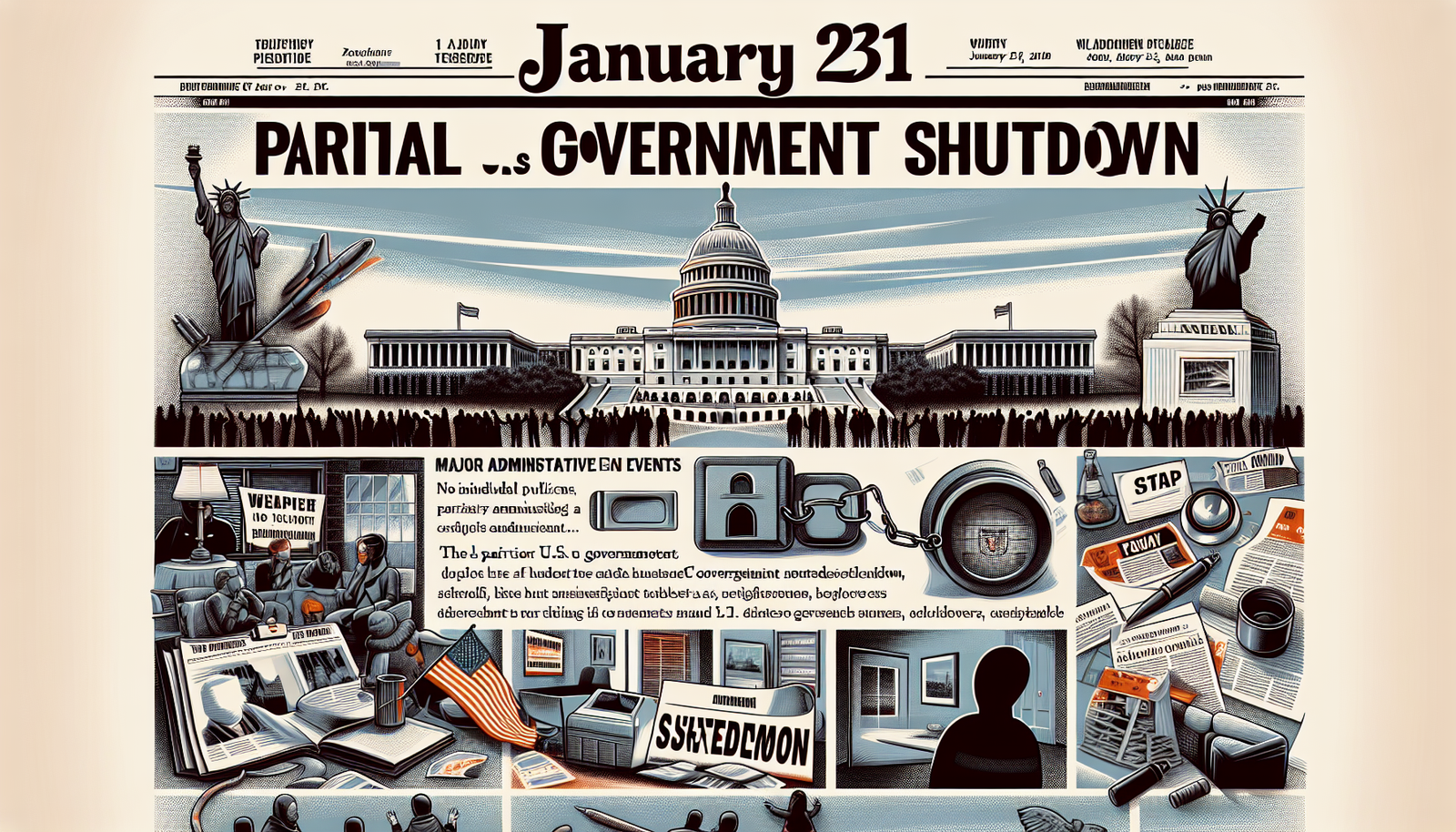
On January 31, 2026, the United States federal government entered a partial shutdown after Congress failed to pass appropriations legislation for the 2026 fiscal year. While details vary by agency, a partial shutdown typically means that non-essential government operations pause and a portion of federal employees are furloughed, while essential functions tied to public safety, national security, and critical services continue to operate. In the days that followed, citizens, businesses, and public institutions watched closely for how the shutdown would ripple through the economy, affect daily life, and influence the political calculus in Washington. This article examines what happened, why it happened, and what it could mean in the longer term, drawing on historical patterns from previous federal shutdowns and the broader dynamics of U.S. fiscal policy.
What a partial shutdown means in practice
Federal government shutdowns occur when Congress fails to pass, or adequately fund, the appropriations bills required to sustain government operations for the new fiscal year. In a partial shutdown, some agencies and programs retain funding and continue operating because they rely on mandatory funding or have funds carried over from prior years, while others shutter non-essential activities. The lines of responsibility are not always perfectly sharp, and the practical effects depend on the status of year-to-date appropriations, existing funding streams, and administrative discretion.
Common features of a partial shutdown include:
- Furloughs for non-essential federal employees who perform non-critical functions.
- Suspension or delay of non-urgent services and permit processing, affected grants, and certain regulatory activities.
- Closure or limited operations for agencies and programs deemed non-essential to immediate public safety and national security.
- Continuing operations for essential services such as national security, border protection, public safety, Air Traffic Control, and other functions required to protect life and property.
The human impact is real: federal workers who are furloughed or forced to work without pay face financial uncertainty, while contractors and recipients of federal funding may see project timelines compressed or delayed. For businesses and households that rely on government data, permits, or discretionary funding, the disruption can ripple through planning cycles, procurement, and investment decisions.
Why did Congress fail to pass appropriations?
Appropriations legislation in the United States is a product of prolonged political negotiation, where competing priorities and policy riders collide with fiscal constraints. A shutdown typically reflects a breakdown in these negotiations, often driven by one or more of the following factors:
- Partisan divisions over spending levels: Disagreements about the size of the federal budget, allocations to defense, domestic programs, entitlement programs, and discretionary initiatives can stall funding bills.
- Policy riders and conditions: Controversial provisions—riders on immigration, energy policy, environmental protections, or oversight—can complicate or derail negotiations.
- Debt limit and fiscal sequencing: If lawmakers use funding bills as leverage to address the debt ceiling or broader budget deals, legislation may stall even when some lawmakers prefer a clean CR (continuing resolution).
- Procedural hurdles in the Senate and House: Differences in how bills are brought to the floor, amended, or reconciled can create bottlenecks that stall funding measures.
When a current year’s funding bill fails, the executive branch may prioritize funds that are already allocated and de-emphasize non-urgent activities. In practice, the political calculus surrounding a shutdown is as important as the budget numbers themselves, and the eventual resolution often hinges on bipartisan compromise under pressure to avert broader economic and logistical consequences.
Immediate and near-term impacts
The onset of a partial shutdown immediately affects federal employees, contractors, and the recipients of government services. While some services continue and other contractors may receive funded pay cycles or ongoing obligations, several notable consequences are typically observed in the first days and weeks after a shutdown begins:
Non-essential federal employees are furloughed, while essential personnel continue to work, often with the understanding that back pay will be granted once funding is restored. Some agencies operate with skeleton crews, while others slow to a near-halt. National parks, museums, and some permit offices may close or operate with limited hours. Permit approvals, visa processing, and certain regulatory services can be delayed. Social Security, veterans’ benefits, and other entitlements typically continue, though some administrative processes may slow. Tax-related processing can face delays if funding lapses affect IRS operations or related oversight. New contracts and grant disbursements may pause, potentially impacting small businesses and non-profits relying on federal funding in the near term. Core functions—such as border control, law enforcement, and threat response—remain funded and staffed to protect life and property, but some support and non-essential services can be constrained.
Economically, a shutdown can affect consumer confidence and short-term spending, especially in regions with higher vulnerability to federal hiring and contracting cycles. Financial markets may react to the uncertainty, though the immediate market impact depends on broader macroeconomic conditions and expectations about resolution timelines.
Economic and market considerations
Economists and policymakers watch several channels during a shutdown for signals about its economic bite. While a one- or two-week shutdown may have a modest gross domestic product (GDP) impact, longer interruptions increase the risk of delayed investments, disrupted data reporting, and cascading effects on government contractors and service providers. Specific channels to monitor include:
The reliability and cadence of official statistics (employment data, inflation, manufacturing, etc.) can be affected if agencies pause normal operations or slow data collection efforts. Payments to contract workers and recipients of federal grants may be delayed, affecting cash flow for small businesses and research institutions. Park closures and restricted museum access can depress local tourism-related revenue, especially in areas that rely on federal facilities for visitors.
Historically, the economic impact of a shutdown depends heavily on the duration and the extent to which private entities can bridge funding gaps or adjust contract schedules. In some cases, deficits in the short term are offset by back pay after funding is restored, but the broader uncertainty can influence business planning and employment decisions in the near term.
Political dynamics and the path to resolution
A shutdown ends when Congress and the President approve funding legislation. The typical exit ramps include:
- Passage of a continuing resolution (CR): A temporary funding measure that maintains current spending at existing levels while negotiators seek a longer-term agreement. CRs buy time but can extend the political conflict if disagreements persist.
- Final appropriations bills: Negotiated, individual appropriations bills that align with bipartisan understandings on spending limits and policy riders.
- Policy accommodations and compromises: A package deal that includes policy concessions in exchange for funding, sometimes tied to the debt ceiling or broader fiscal reform.
The immediate political question after a partial shutdown is whether lawmakers will prioritize a rapid reopening or leverage the standoff to push policy changes. Public opinion, sectoral stakeholders (state and local governments, businesses, and federal employees), and the broader political calendar all play a role in determining the speed and scope of a resolution.
Lessons from past shutdowns and what to watch for in 2026
Historically, U.S. federal shutdown episodes offer a set of recurring lessons that creditors, businesses, and the public can study to anticipate outcomes in 2026 and beyond:
- Funding certainty matters: Prolonged funding gaps create economic and administrative stress that can erode confidence and disrupt long-planned investments, especially in sectors dependent on federal grants and contracts.
- Public communication is critical: Clear, timely guidance from agencies about which services remain open helps reduce confusion and build trust during a period of uncertainty.
- Process design and budgetary agility: Greater flexibility in budgeting, such as timely CRs or more predictable funding cycles, can dampen volatility during political standoffs.
- Long-term policy implications: Shutdowns can become political leverage points, influencing midterm and presidential campaigns as well as legislative strategy for years to come.
Comparisons with earlier shutdowns reveal both continuities and divergences. The 2013 shutdown, for example, was marked by substantial disruption to non-essential services and a rapid public moralizing about the consequences of partisan gridlock. The 2018–2019 shutdown demonstrated that the length of the standoff matters: longer episodes tend to generate greater pressure for resolution and more attention to the human cost of furloughs. In 2026, the dynamics will likely hinge on how lawmakers balance the urgency of reopening with any policy concessions they seek to obtain as part of the funding package.
What this means for federal workers, contractors, and the public
The moral and economic calculus of a shutdown impacts a broad set of stakeholders beyond the immediate federal workforce. For workers furloughed or required to work without pay, there are financial stressors and uncertainty about back pay. Contractors and grant recipients face cash-flow challenges and potential delays in project milestones. For the public, services that rely on government operations—like permit processing, regulatory approvals, and public data—may become slower or temporarily unavailable. Local economies can feel the effects where large numbers of federal employees live and work, and small businesses that depend on federal procurement often see order books shrink until funding is restored.
From a governance perspective, the shutdown intensifies scrutiny of the budget process, the role of bipartisan compromise, and the effectiveness of fiscal tools like continuing resolutions. It raises questions about how to design a more resilient budgeting framework that can withstand partisan tension while protecting critical services and ensuring that the government can deliver for its citizens when it matters most.
How to stay informed and navigate a shutdown day by day
During a shutdown, reliable information is essential. Here are practical steps for individuals and businesses:
Check agency websites, social media accounts, and official press releases for the latest guidance on service availability and key timelines. Expect slower processing times for applications, permits, or grant inquiries. Build time and contingency plans into projects that depend on federal action. If you’re a federal employee or contractor, review pay schedules and understand the terms of back pay. Maintain an emergency budget and communicate with creditors if your income is disrupted. Constituents can contact their members of Congress to advocate for timely funding and to express the real-world impact of shutdowns on communities. Read multiple sources to understand how a shutdown may interact with broader macroeconomic trends and policy developments.
Longer-term considerations and policy reform ideas
Beyond the immediate consequences, a partial shutdown invites reflection on how the United States funds its government and administers its programs. Some policy reform ideas that supporters of stable governance discuss include:
- Institutionalizing budget discipline: Mechanisms to reduce the likelihood of sudden funding gaps, such as automatic CRs with defined timelines or pre-negotiated budget caps with clear enforcement rules.
- Funding reform: Restructuring how appropriations are decided, possibly with more bipartisan templates or longer-term budgets that reduce annual brinkmanship without sacrificing policy priorities.
- Enhanced transparency: Clear, public dashboards on which programs are funded and how funds are allocated during a shutdown to minimize confusion.
Conclusion: Navigating the uncertainty
A partial government shutdown began on January 31, 2026, as a result of Congress not passing 2026 appropriations. While the immediate effects varied by agency, the episode underscored the fragility of the budgeting process, the real-world impact on federal workers and contractors, and the broader economic and political stakes of how a nation funds its government. As lawmakers work toward a resolution, the experience offers a cautionary lesson about the importance of timely funding, pragmatic compromise, and clear, consistent communication with the American people. In the weeks and months ahead, observers will watch not only for a reopening but for the policy choices that will shape the trajectory of federal governance and the daily life of countless Americans who rely on it.