
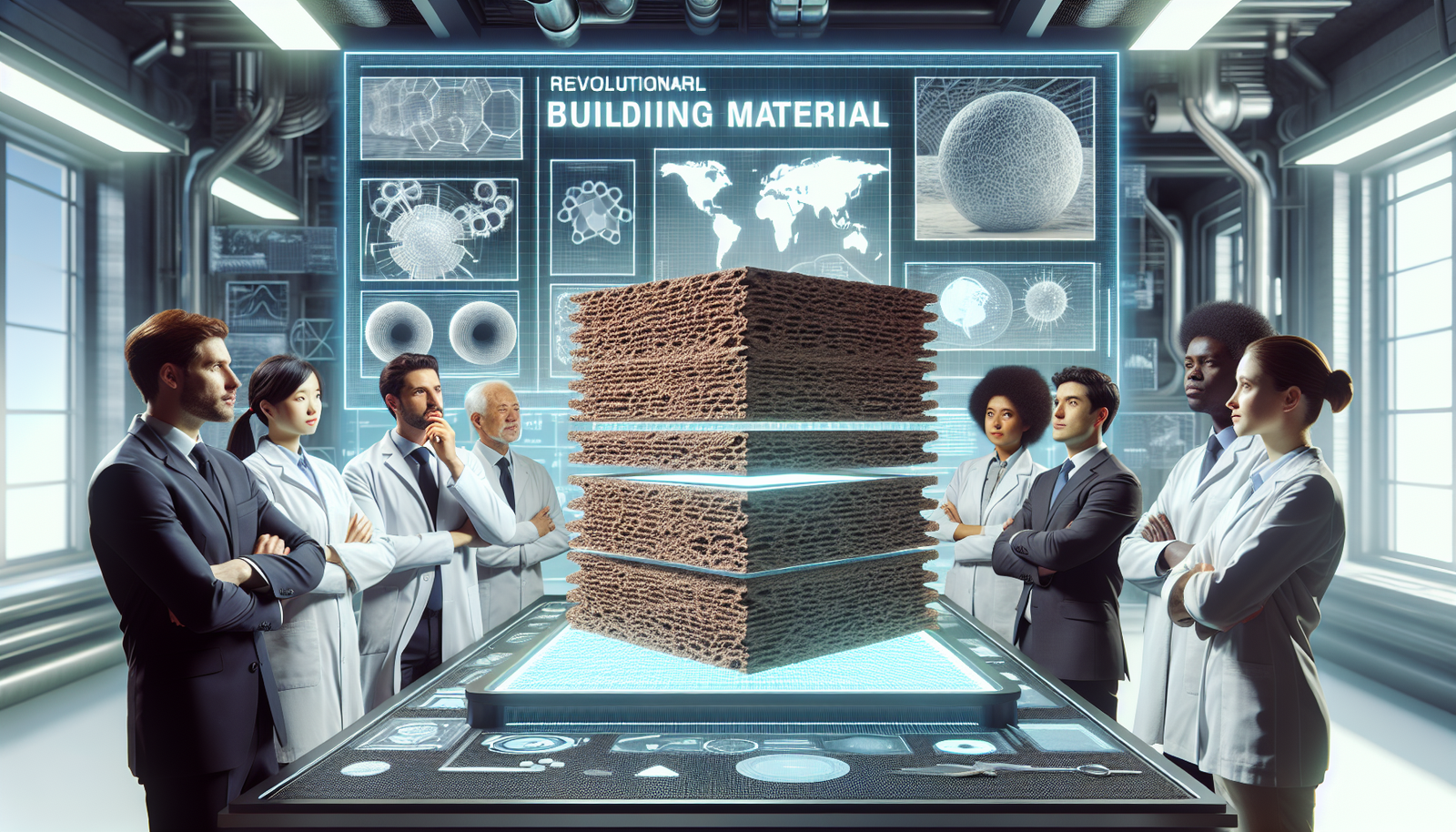
WPI’s Groundbreaking Building Material Could Change How the World Builds
Construction is on the brink of another transformation. Reports highlighted by ScienceDaily describe a novel building material developed by engineers at Worcester Polytechnic Institute (WPI) that promises to redefine how we design, fabricate, and assemble structures. While details are still unfolding through peer review and field testing, the early signals point toward a material that could deliver higher performance with a lower environmental footprint—and that combination could reshape entire supply chains and regulatory expectations across the globe.
What is the new material?
In broad terms, the announcement centers on a new cementitious composite that blends a high-strength matrix with advanced reinforcement and carefully selected supplementary components. The aim is to achieve a trifecta of improved strength-to-weight ratio, faster curing times, and greater toughness without sacrificing durability. Some early descriptions hint at the inclusion of recycled content and nano-scale additives that alter the microstructure of the cement, leading to better crack arrest and resistance to environmental degradation.
As reported by outlets like ScienceDaily, researchers emphasize that the material is designed for scalable production, with an eye toward compatibility with existing precast, cast-in-place, and digital fabrication workflows. The key idea is to deliver predictable, repeatable properties across large volumes, enabling designers to push toward more ambitious forms and performance targets without paying a steep premium in energy use or raw materials.
It is important to note that this is an evolving story. Laboratory tests are the first step, and the transition from lab bench to construction site will require validation under real-world conditions, long-term durability studies, and alignment with building codes and safety standards. Still, the concept is anchored in a practical objective: to create a versatile, resilient material that can be manufactured at scale and used across a wide range of climates and applications.
How it works (in plain language)
The material blends a cementitious matrix with reinforcing elements and smart additives. In non-technical terms, imagine a concrete-like matrix reinforced with strands or fibers that distribute stress more effectively than traditional concrete. The additives are designed to interact with the cement at a microscopic level, delaying micro-cracks from turning into visible fractures, and enabling the material to absorb energy during events like earthquakes or heavy wind loads.
Researchers describe a multi-scale design approach: at the nanoscale, additives influence hydration reactions and microstructure; at the mesoscale, reinforcements distribute load and improve toughness; at the macroscale, the material can be cast or extruded using current construction technologies. When these scales work in concert, a structure can be lighter for the same strength, or stronger for the same weight, all while reducing waste and speeding up construction timelines.
Manufacturing considerations are central to the story. The team is exploring compatibility with existing cement and aggregate supply chains, as well as modern fabrication methods such as precast elements, 3D printing, and modular assembly. That focus on integration matters because the most impactful materials are rarely those that require wholly new, parallel infrastructure. Instead, they are materials that can slot into what builders already know how to do—just more efficiently and with better performance.
Why this matters: environmental and economic implications
Construction is one of the largest sources of global carbon emissions. A material that reduces embodied energy, improves durability, and extends service life could meaningfully slow the pace of carbon release associated with buildings and infrastructure. Early-stage estimates from researchers point to several potential benefits:
- Lower embodied carbon through optimized cement chemistry and higher recycled content.
- Faster construction cycles due to quicker curing and easier handling, which lowers project costs and reduces on-site waste.
- Improved durability and resistance to environmental factors, potentially lowering maintenance and replacement needs.
- Better performance in extreme loading scenarios (seismic, wind), which can improve safety and resilience of critical structures.
Of course, the carbon and cost calculus will depend on the full life cycle analysis, local energy prices, and the performance requirements of each project. Early analyses suggest that, if scaled responsibly, the material could offer a favorable balance between upfront cost and long-term savings. In other words, the sustainability dividend may accrue over decades rather than being a single-year financial benefit.
Potential applications across sectors
The design goals of a high-performance, adaptable cementitious composite open doors across multiple sectors:
Faster construction, lighter floors and walls with improved insulation and acoustic properties, and better energy performance. - Infrastructure: Bridges, tunnels, and retaining walls that require long-term durability and resilience against environmental stresses.
- Seismic zones: Structures with enhanced ductility and energy absorption to reduce collapse risk during earthquakes.
- Modular and rapid-deployment housing: Standardized elements that can be produced off-site and shipped quickly to disaster-affected areas or growing urban markets.
- Aerospace and defense infrastructure: Specialized foundations and hangars where weight savings and stiffness contribute to performance and cost efficiency.
Beyond these primary use cases, the material could enable innovative architectural forms thanks to improved workability and reduced cracking, allowing for longer spans, more complex facades, and new stylistic possibilities without sacrificing safety or longevity.
Roadmap to adoption: challenges and milestones
Like any transformative material, this development faces a set of real-world hurdles. Understanding and planning for these challenges is essential for accurate industry forecasting:
- Validation and durability: Long-term testing under real environmental conditions, humidity cycles, freeze-thaw resistance, and fire safety performance are critical before widespread adoption.
- Code and standards: Building codes determine what can be used safely. The material will need to earn approvals from codes bodies and standards committees, which can be a lengthy process.
- Manufacturing scale: Transitioning from lab-scale batches to mass production requires robust supply chains, quality control, and cost-effective synthesis of any new additives or reinforcements.
- Supply chain resilience: Sourcing of specialized materials and potential recycling streams must be reliable to avoid project delays.
- Economic viability: The initial cost premium, if any, must be balanced by life-cycle savings, insurance incentives, and potential government subsidies or green building incentives.
Strategically, researchers typically pursue a staged rollout: pilot projects in collaboration with industry partners, followed by scaled-down code testing, and ultimately broad adoption in regions with supportive regulatory and market conditions. Public-private collaboration, aligned with funding initiatives, can accelerate the transition from promising lab results to real-world impact.
What’s next for the researchers and the industry?
Researchers at WPI and their collaborators are likely to pursue multiple parallel tracks. These could include field trials in controlled environments, partnerships with construction firms that specialize in precast elements, and engagement with standards bodies to begin shaping code language around material performance. In parallel, researchers may explore tailor-made variations of the composite to address climate-specific challenges, such as higher humidity environments, freeze-thaw cycles in northern climates, or high-temperature exposure in desert regions.
From an industry perspective, a successful demonstration could spur investment in new manufacturing lines and partnerships with contractors who value speed, resilience, and sustainability. The ability to integrate with digital design workflows—generative design, BIM (Building Information Modeling), and automated fabrication—could further amplify the material’s impact by reducing design-to-build time and enabling more optimized, safer structures.
Regulatory and standards considerations
One of the most important strands in turning a promising material into everyday reality is regulatory alignment. Building codes are designed to protect life safety and ensure predictable performance. A new cementitious composite must undergo a rigorous assessment process that covers structural behavior, long-term durability, environmental impact, and compatibility with existing construction methods. Stakeholders—including researchers, manufacturers, code officials, and insurers—will need to collaborate to develop test methods, certification programs, and performance-based design criteria that reflect the material’s unique properties.
Open channels for communication between academia and industry—such as pilot projects, joint industry standards development, and shared test facilities—can shorten time-to-market while maintaining safety and reliability. Transparent reporting of test results, including both successes and uncertainties, will help builders make informed decisions about when and where to deploy the material.
Conclusion: a potential turning point for sustainable construction
The report on a new building material from Worcester Polytechnic Institute represents more than a technical breakthrough. It signals a shift in how researchers, builders, and policymakers approach the built environment. By combining improved performance with a potential reduction in embodied carbon and waste, this material has the potential to recalibrate risk and opportunity across the construction value chain. If the science holds up through peer review and field validation—and if industry and regulatory ecosystems adapt in tandem—the world could lean more heavily on a material that is both stronger and greener.
For readers and practitioners eager to follow this story, the latest reporting from ScienceDaily and other science outlets is a useful starting point. You can review the ScienceDaily coverage here: ScienceDaily – Worcester Polytechnic Institute building material.