What If January 31, 2026 Brought a Partial Federal Government Shutdown? A Hypothetical Analysis
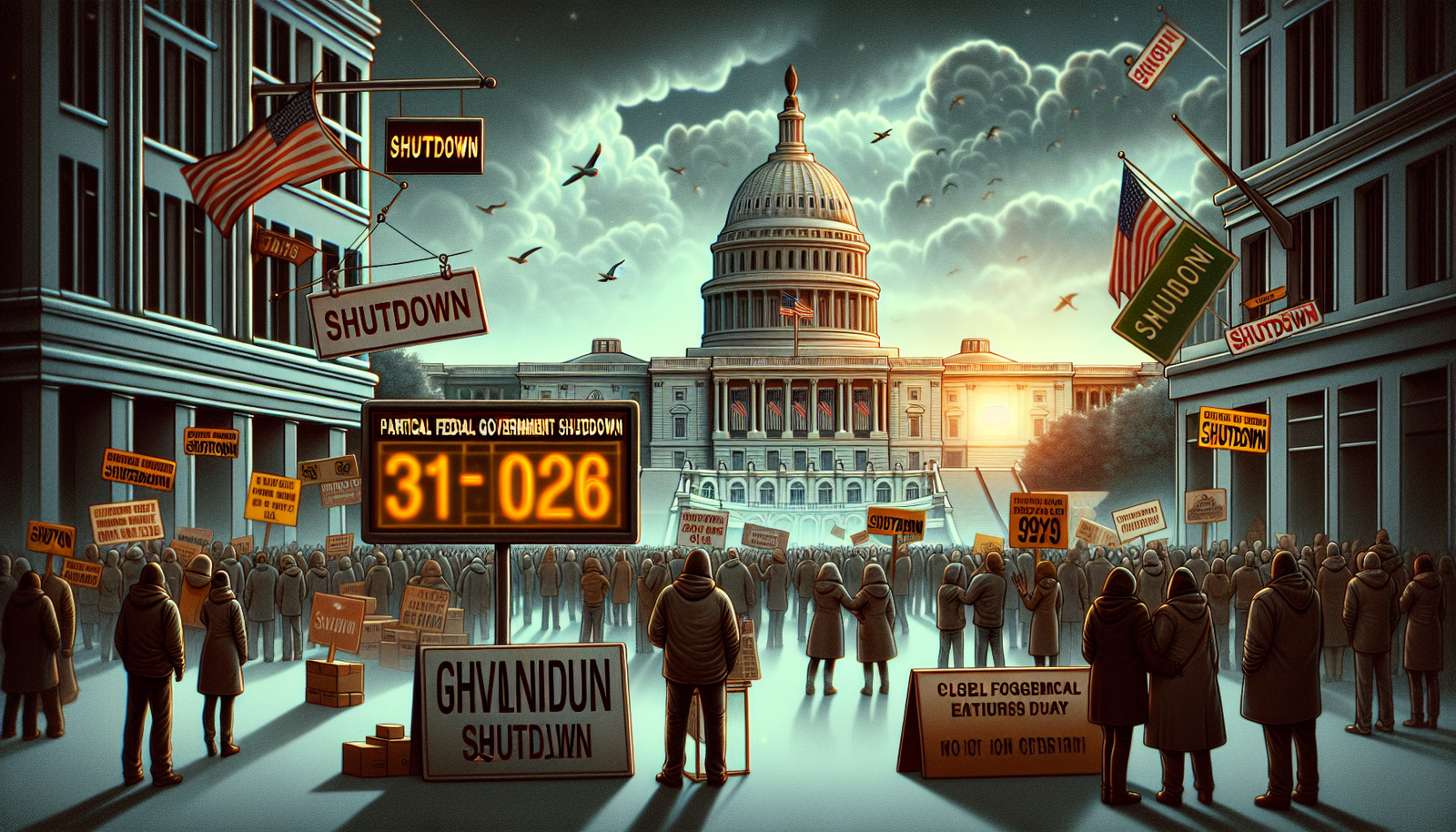
On January 31, 2026, the United States faced a partial federal government shutdown after Congress failed to pass appropriations for the 2026 fiscal year. For the purposes of this article, we treat this as a hypothetical scenario to explore potential consequences for the economy, federal operations, and everyday life. This analysis draws on the general mechanics of funding gaps that have occurred in the past and references to discussions about the 2026 shutdown. It is intended as an informative scenario planning piece, not a forecast of what will happen. If you want a concise briefing of the event as reported by sources, you can consult the overview available at this page.
1. The mechanics of a funding gap: why a shutdown can happen
In the United States, the annual appropriations process determines how much money the federal government can legally spend each fiscal year. When Congress does not pass a full appropriations bill—or a continuing resolution (CR) to fund government operations at existing levels—funding gaps occur. A partial shutdown typically means that some agencies continue to operate under emergency or mandatory funding, while others close their doors or suspend nonessential services. This dynamic is not new: past shutdowns have occurred when budgets were stuck in partisan stalemates, forcing leaders to weigh the consequences of inaction against political objectives. For readers who want background on past and present funding gaps, standard explanations emphasize the roles of the House, Senate, and the President in passing and signing appropriations bills or CRs, and how the absence of funding affects day-to-day government operations.
2. What a partial shutdown would mean, at a glance
A hypothetical partial shutdown typically involves a mix of continued operations funded by prior appropriations or mandatory funding, alongside other departments shuttering nonessential services. In practical terms, affected areas might include national parks and museums, some regulatory and grant-making agencies, and certain federal services that rely on discretionary funding. The level of disruption often hinges on which agencies are funded and which are left to conserve cash flow while negotiating a longer-term solution. Business owners who rely on federal permits, loans, or regulatory approvals could face delays, while social programs financed through mandatory funding—such as veterans’ benefits—are generally protected, at least in the short term. The delineation between essential and nonessential functions can shift during a crisis, complicating planning at state and local levels that partner with federal programs.
3. Immediate operational impacts on the ground
When a shutdown enters its partial phase, several concrete effects tend to surface quickly:
- Federal employees and contractors: Some workers are furloughed, while others remain on duty to handle essential tasks. Contractors with ongoing projects may experience funding slowdowns or pauses, affecting wages and schedules.
- Public-facing services: Passport processing, some visa services, and certain permit approvals may slow or pause. National parks and monuments often reduce hours or close; galleries, museums, and similar facilities may follow suit.
- Regulatory and grant-making activities: New grant announcements can be delayed; rulemaking and compliance activities may slow down as staff remain limited. This matters for universities, researchers, and non-profits relying on federal support.
- Research and science: Government laboratories and research programs often experience pauses in nonessential projects, with potential ripple effects on funding cycles and collaborations.
4. Economic consequences: markets, contractors, and small businesses
The macroeconomic footprint of a partial shutdown depends on duration and the sectors most affected. In a scenario like this, several channels shape the economic outlook:
- Markets and uncertainty: Financial markets tend to price in policy uncertainty, which can increase volatility in the short run. Even if the shutdown is temporary, the anticipation of protracted political wrangling can weigh on investor confidence.
- Federal procurement and contracting: Delays in contract payments and new awards can ripple through small businesses and suppliers that rely on timely reimbursements and predictable funding streams. Cash flow disruptions can have compounding effects on payroll and operations.
- Local economies near federal facilities: Communities dependent on federal activity—retail, hospitality, and services near large federal campuses or bases—may see softer demand and slower hiring in the short term.
- Longer-term growth considerations: If funding gaps persist, nonessential projects may stall, potentially delaying innovations or long-range planning in sectors like infrastructure, climate research, and energy policy.
5. Political dynamics: what dissension could look like in a stalemate
A hypothetical shutdown exposes the fault lines that often determine policy outcomes. The interaction between the House of Representatives, the Senate, and the President can become a theater of negotiation—and pressure points—over spending priorities, policy riders, and debt management. In such a scenario, several political dynamics typically emerge:
- Budget priorities: The opposition or governing coalition may stake out demands on domestic programs, defense, or specific policy initiatives, leading to a stalemate that prolongs funding gaps.
- Public messaging and political calculus: Leaders may frame the shutdown as a disagreement over core values or priorities, while emphasizing the need to protect essential services. The messaging strategy often shapes public opinion and the leverage each side holds in negotiations.
- Budgetary consequences and leverage: The party that controls the majority in the House vs. the Senate can exert distinct pressures through procedural tools, which can either shorten or extend the shutdown depending on the inter-branch dynamics.
6. The weeks ahead: potential paths to resolution
In most real-world instances, a funding gap ends through one of several routes. In our hypothetical, those routes might include:
- Temporary funding with a CR: A continuing resolution that preserves current funding levels can buy time for negotiations while avoiding abrupt service interruptions, though it may carry policy riders that both sides dislike.
- Partial or full budget deal: A negotiated package that satisfies enough lawmakers to pass both chambers and receive the President’s signature, potentially accompanied by policy compromises and targeted spending adjustments.
- Incremental funding: A staged approach where core agencies receive funding first, followed by nonessential operations as a longer-term solution is hammered out.
7. Guidance for individuals and businesses during a hypothetical shutdown
Whether you are a federal employee, a contractor, a student, a small business owner, or a citizen who relies on government services, practical steps can help mitigate disruption:
- Stay informed: Follow official channels for updates on funding status, agency-specific notices, and service availability. Local and state authorities may also issue guidance that intersects with federal programs.
- Plan for service delays: If you require federal services such as visas, passports, or grants, prepare for potential delays and consider submitting requests early when funding is uncertain.
- Manage finances and payroll: For affected workers and contractors, maintain cash reserves, renegotiate timelines with vendors, and track any changes in reimbursement policies or payments.
- Coordinate with lenders and suppliers: Small businesses should communicate proactively with lenders and suppliers to manage risk and avoid abrupt interruptions in operations.
- Preserve critical records: Ensure that essential documents and compliance requirements are saved and accessible, in case temporary service pauses impact processing timelines.
8. Lessons from history and how to prepare moving forward
Historically, shutdowns reveal the fragility and resilience of the federal funding process. They underscore the importance of timely appropriations, the consequences of last-minute political brinkmanship, and the practical need for contingency planning across government, industry, and households. From an organizational perspective, agencies that maintain robust continuity plans and clear communication channels tend to weather short funding gaps with less disruption to mission-critical work. For individuals, a few preparatory steps—emergency savings, updated contact information with agencies, and awareness of program chains (benefits, eligibility, and timelines)—can reduce the personal impact of a shutdown, should it occur again.
9. How to monitor credible information about a potential shutdown
In times of fiscal uncertainty, rely on data-driven, credible sources for updates. Official agency announcements, congressional leadership statements, and analyses from established nonpartisan research organizations are more reliable than rumor. For background on how funding gaps have been described in public discourse, you can consult comprehensive overviews such as the referenced Wikipedia page about the 2026 shutdown, along with primary sources from Congress and the White House when available.
Conclusion
This hypothetical scenario is intended to illuminate the potential consequences of a January 31, 2026 partial federal government shutdown. While the exact outcomes would depend on the duration of the funding gap, which agencies are affected, and the political climate at the time, several themes recur across shutdowns: the importance of timely funding to keep operations running, the exposure of communities to disruption, and the economic and political ripple effects that follow. By understanding these dynamics, individuals, businesses, and policymakers can better prepare, respond, and negotiate toward solutions that minimize harm while preserving essential government functions.
Note: This article treats the date and event as hypothetical for analytical purposes. It does not predict the actual occurrence or timing of a shutdown.