
Highest Gaza Civilian Toll in Over Two Months: 32 Palestinians Killed, Including Children, in Israeli Airstrikes
Date: February 2, 2026
Source: City News Service (reported on citynewsservice.cn). This post reflects reported figures as of publication and may be updated as authorities verify details.
In what contemporary observers describe as a troubling escalation, Israeli airstrikes across Gaza have killed at least 32 Palestinians, including children, marking the highest one-day death toll in more than two months. The losses were reported in multiple strikes across the territory and come amid ongoing violence that has devastated communities, disrupted essential services, and intensified international appeals for restraint and humanitarian access.
The figures cited by City News Service indicate a broad toll, with casualties concentrated in densely populated neighborhoods where civilians have limited places of safety. As with other flare-ups in the Gaza-Israel conflict, verification remains challenging in the immediate aftermath of a strike, and casualty tallies can evolve as hospitals, aid workers, and local authorities compile information from affected areas. The reported number—32 dead, including children—underlines the precarious line between military objectives and the severe civilian harm that accompanies urban air campaigns in Gaza’s crowded urban landscape.
What happened: A snapshot of the incident
Details about the specific strike or strikes are still being confirmed by officials on the ground and by independent observers. Across Gaza, medics and witnesses reported scenes of destruction, with ambulances rushing to the sites where homes, schools, and clinics were hit. The scale of the casualties suggests multiple locations were affected within a short time frame, a pattern seen in previous rounds of fighting where separate strikes occur in rapid succession.
Witness accounts and hospital briefings describe injuries ranging from critical head trauma to burns and shrapnel wounds. In many such incidents, children are among the most vulnerable, experiencing the fear and confusion of sirens, family separations, and the collapse of safe spaces like schools and clinics that communities rely on for protection.
Officials have called for restraint and for the rapid deployment of humanitarian aid. As in past episodes, international bodies stress the need for clear investigations into civilian harm and for ensuring that civilian infrastructure—hospitals, water systems, electricity—remains as shielded as possible from the effects of conflict.
Context: Why Gaza has endured repeated clashes
The Gaza Strip has faced more than a decade of blockades, conflict, and recurring flare-ups between Israeli forces and Palestinian factions. The latest surge of violence occurs in a region where political stalemates, economic hardship, and limited access to essential services intersect with military operations. For residents, the daily risk is not only from direct strikes but also from the disruption of essential services—clean water, reliable electricity, medical supply chains, and safe mobility to seek care or work.
Observers note that the population in Gaza is highly concentrated in urban centers. When airstrikes target infrastructure or neighborhoods, the likelihood of civilian casualties increases, particularly among families with children who rely on crowded shelters during alarms. The international community has long urged all parties to distinguish clearly between military targets and civilian life, a principle enshrined in international humanitarian law that many accuse both sides of bending during periods of heavy fighting.
The toll on civilians in Gaza is severe and multifaceted. Beyond immediate fatalities, survivors face injuries, long-term disabilities, and the trauma of losing loved ones. Children, who are often the most vulnerable in armed conflict, confront disruption to education, exposure to violence, and the psychological scars that can endure for years. Hospitals and clinics faced with an influx of wounded patients may struggle to provide timely care, especially if operating rooms are overwhelmed, supply chains are interrupted, or power shortages hinder life-saving equipment.
Humanitarian groups repeatedly warn that even short pauses in hostilities or ceaseless fighting can curtail access to food, water, and medications. In response, communities may rely on makeshift shelters, informal networks, and aid deliveries, yet access for humanitarian workers to reach affected neighborhoods remains a critical challenge during such escalations. The human cost—especially among children—complicates any discussion of strategic objectives with moral and legal obligations to protect civilians at all times.
International response and humanitarian concerns
Across the globe, governments, regional organizations, and humanitarian agencies have urged restraint and emphasized the protection of civilians in Gaza. Calls for investigations into civilian harm, the protection of schools and hospitals, and the urgent delivery of aid have all featured prominently in statements by the United Nations, the European Union, and neighboring states.
Humanitarian organizations highlight that the ability to deliver aid is often constrained by security conditions, border closures, and the volatility of fighting. Even when aid is allowed to enter Gaza, bottlenecks in distribution can leave clinics and households waiting for essential supplies such as medicines, fuel, and clean water. The latest fatalities intensify an already fragile humanitarian situation and may influence aid planning, diplomatic outreach, and ceasefire negotiations in the days ahead.
What this means for Gaza and for the path toward a lasting resolution
Events like these shape the immediate and long-term outlook for Gaza’s civilian population. In the short term, families grapple with grief, displacement, and the daunting task of securing basic necessities. In the longer term, repeated cycles of violence complicate reconstruction, economic recovery, and the prospects for a sustainable political process. Civilians often carry the burden of political failed negotiations—verbal commitments without reliable protection and accountability can leave communities exposed to the next round of violence.
For international actors, the challenge remains how to align strategic security objectives with humanitarian imperatives. This involves robust monitoring of civilian harm, transparent reporting, and credible steps to ensure aid reaches those in need. It also requires renewed efforts to create space for de-escalation, confidence-building measures, and, where possible, durable solutions that address the underlying drivers of the conflict.
What readers can do: ways to engage responsibly
Readers who want to stay informed can:
- Follow reputable outlets and verify casualty figures as they are updated by official sources and human rights organizations.
- Avoid spreading unverified rumors or inflammatory language that could escalate tensions or cause further harm.
- Support humanitarian organizations providing medical care, food aid, and essential services to people in Gaza, if able.
- Advocate for peaceful diplomacy and accountability, emphasizing civilian protection during conflicts.
News consumers should also consider the broader context of the region’s history, current military operations, and the human stories behind casualty figures. Ethical reporting involves careful sourcing, careful language, and a commitment to avoiding sensationalism that obscures the real impact on families and communities.
Source note
This post references a report indicating that Israeli airstrikes in Gaza killed at least 32 Palestinians, including children, marking the highest one-day death toll in over two months. The primary reported figures come from City News Service as cited by citynewsservice.cn. Casualty figures in conflict zones can change as investigations continue and as hospitals, local authorities, and international agencies confirm details. Readers are encouraged to consult the linked source for the most current information and to follow updates from reputable humanitarian organizations for context and verification.
Israeli Airstrikes: A Deepening Humanitarian Crisis
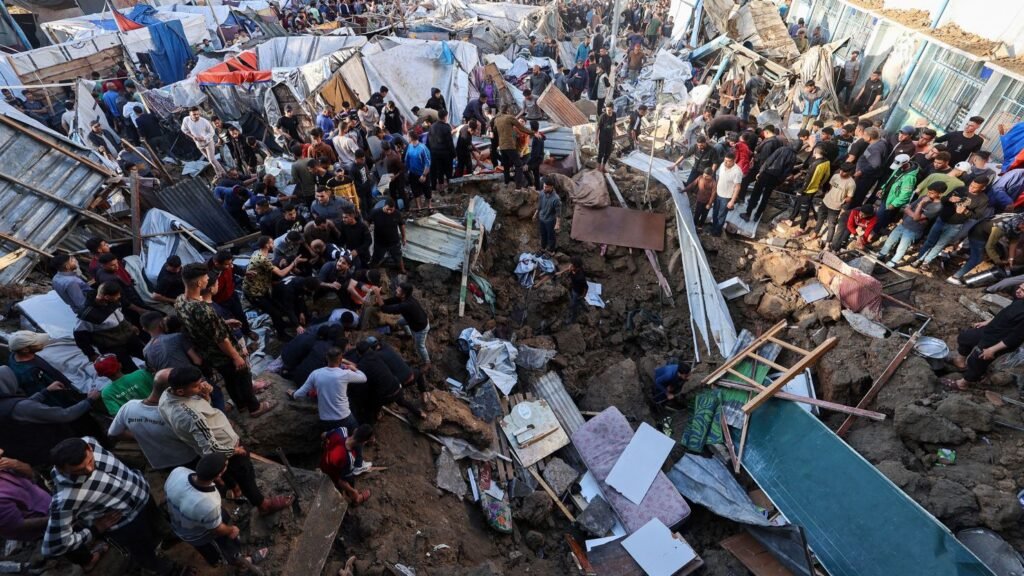
As of February 3, 2026, Gaza is facing a “double crisis”: the resumption of high-intensity airstrikes and a brutal winter that is proving as lethal as the munitions. Despite a ceasefire that was established in October 2025, recent weeks have seen a dramatic escalation in violence.
Recent Escalation and Human Toll
The “relative calm” of the late 2025 truce has fractured. On January 31, 2026, Save the Children and local medical sources reported some of the most intense airstrikes since the early days of the war.
- Death Toll: The Ministry of Health in Gaza reports that the cumulative death toll has surpassed 71,800 Palestinians, with over 171,400 injured. Since the October truce alone, at least 524 people have been killed by renewed fire.
- The “Yellow Line”: Israeli forces remain deployed in over 50% of the Gaza Strip (beyond the so-called “Yellow Line”). This military presence restricts civilians from returning to their homes and prevents farmers from reaching agricultural land, maintaining a state of permanent displacement.
- Journalist Casualties: As of late January 2026, the number of journalists killed in Gaza has reached 258, according to the Palestinian Journalists Syndicate
Infrastructure and Humanitarian Access
Infrastructure and Humanitarian Access
The “Yellow Line”—the demarcation of Israeli military deployment—remains a major obstacle to recovery.
- Restricted Zones: The Israeli military remains deployed in over 50% of the Gaza Strip, restricting access to agricultural land, the sea, and vital public infrastructure.
- Medical Crisis: Most medical infrastructure is destroyed. The Rafah crossing began a “trial operation” on February 1, 2026, to allow a very limited number of people (approx. 50 per day) to leave for medical treatment, but goods and aid remain strictly limited.+1
- Education: Approximately 60% of school-aged children remain without access to in-person learning for the 2025-2026 academic year.
A Shift in Official Figures
In a significant development on January 30, 2026, the Israeli military publicly acknowledged for the first time that the death toll compiled by Gaza health authorities is “broadly accurate.” This marks a U-turn from previous years where the figures were dismissed as propaganda.
Would you like more information on the specific diplomatic efforts currently underway to reinforce the ceasefire, or more details on the “Board of Peace” proposal?
The Winter Survival Crisis
For the 1.9 million displaced people, the threat of airstrikes is now compounded by environmental hazards.
- Hypothermia: At least 11 children have frozen to death in displacement camps as of early February. A two-month-old baby was among the recent victims of hypothermia reported in late December and January.+1
- Flooding: Heavy rains and high tides have inundated the Al-Mawasi tent camps in Khan Younis. Seawater and sewage have destroyed thousands of makeshift shelters, forcing families to move to higher, colder ground with soaked belongings.+1
- Infrastructure Collapse: With 90% of civilian infrastructure destroyed, there is virtually no heating, and many families have resorted to burning trash for warmth, leading to a surge in respiratory infections.